
One missed rent payment can produce fifty conflicting answers. The useful question is not whether to wait or evict—it is which payment is missing, which agreement governs it, and which rules apply where the property is located.
The rent did not disappear all at once.
In an account shared for this article, a first-time landlord said a tenant receiving rental assistance could no longer pay part of the rent. The landlord was still receiving a government payment, but the household's share had stopped. Online commenters immediately divided into camps: send a three-day notice, wait for the housing authority, refuse all future Section 8 applicants, demand a high credit score, pay the tenant to leave, or find someone who could remove the household without a lawyer.
Those answers sounded decisive. They were not answering the same question.
Some comments confused the housing authority's payment with the tenant's portion. Others imported a notice period from one state into a case whose location was unknown. Several treated the Public Housing Agency, or PHA, as if it were the landlord's collection department. And some suggested screening tactics that could create source-of-income discrimination problems.
The better starting point is less dramatic and more useful:
Do not treat “Section 8 rent is unpaid” as one fact. Identify which payment is missing, reconcile the documents, and confirm every notice rule that applies before choosing a form or deadline.
This approach does not require a landlord to ignore unpaid rent. It preserves more options—communication, rent recalculation, a repayment agreement, voluntary settlement, or court action—without letting a preventable accounting or procedural mistake decide the outcome.
Quick answer: A Housing Choice Voucher tenancy usually has two payment streams: the PHA's Housing Assistance Payment and the tenant's portion. The tenant is generally responsible for the portion not covered by the PHA, but not for a PHA payment that the HAP contract assigns to the agency. If the tenant portion is unpaid, the owner may have remedies under the lease and local law, but there is no single national “Section 8 eviction notice.” Check the ledger, current PHA rent determination, lease, Tenancy Addendum, HAP Contract, state and local rules, and any federal notice requirement before acting.
Editorial note: The opening scenario is an anonymized summary of user-provided material. Usernames, identifying details, and social-media comments have not been reproduced. This article provides general information, not legal advice.
“Section 8 Rent” Is Not One Payment
The Housing Choice Voucher program is often described as the government paying part of a household's rent. That description is directionally correct but operationally incomplete.
A landlord may see several different amounts connected to the same unit:
| Amount | Usually determined or paid by | First document or record to check |
|---|---|---|
| Rent to owner | Approved through the tenancy and PHA process | Lease, HAP Contract and PHA approval |
| Housing Assistance Payment (HAP) | Paid by the PHA to the owner | HAP Contract and PHA payment record |
| Tenant portion | Paid by the assisted household | Current PHA rent determination and lease ledger |
| Utilities or other charges | Depends on the lease and program documents | Lease, utility allowance and itemized ledger |
| Late fees, damage or other non-rent charges | Depends on the lease and applicable law | Lease and state/local rules |
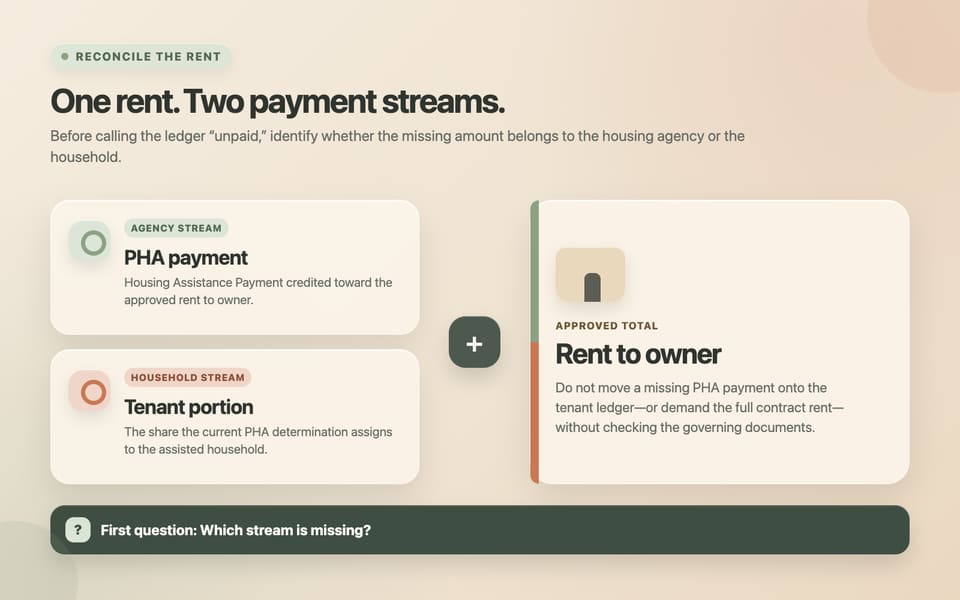
Figure 1. A voucher tenancy can have two payment streams. The first accounting question is which stream is missing.
HUD's current HCV guidance explains that the PHA calculates the family's rent portion and pays the Housing Assistance Payment directly to the landlord. HUD: Housing Choice Voucher Tenants
The federal regulation governing the HAP Contract adds an important boundary: the PHA payment is credited toward the rent to owner, the tenant cannot be charged more than the portion left after the HAP, and the family is not responsible for the rent covered by the PHA's payment obligation. 24 CFR § 982.451
HUD's Tenancy Addendum makes the same distinction in the documents attached to the lease. It says the family pays the portion not covered by the HAP, while a PHA failure to make its payment is not a lease violation by the tenant and cannot be used by the owner as the basis for terminating the tenancy. HUD-52641-A Tenancy Addendum
That produces three very different situations:
The PHA payment is missing
Do not automatically add it to the tenant's balance. Confirm whether the payment was delayed, suspended, adjusted, abated, or simply posted incorrectly. Review the HAP Contract and contact the PHA through its official owner channel.
The tenant portion is missing
Confirm the amount using the latest PHA determination—not an old spreadsheet or the full contract rent. Then check the lease, payment history, any reported income change, and the notice rules that apply to the property.
The ledger is mixing rent with other charges
Separate late fees, utilities, repairs, damage claims, court costs and other charges from rent. A lease may make an amount collectible without making it appropriate to include in a particular pay-or-quit notice. California's courts, for example, say a three-day notice for nonpayment may demand past-due rent but not late fees, utilities or damages. California Courts: Types of Eviction Notices
Before asking “How fast can I start an eviction?” make sure the amount on the page is the amount the tenant was actually required to pay.
Four Layers Can Control the Same Tenancy
A voucher tenancy is not governed by one piece of paper. At least four layers may matter.
| Layer | Relationship | What it usually answers |
|---|---|---|
| Lease | Owner ↔ Tenant | Due date, tenant obligations, ordinary lease terms |
| Tenancy Addendum | Incorporated into the lease | HCV-specific terms; controls when it conflicts with the lease |
| HAP Contract | Owner ↔ PHA | PHA payment, approved rent and owner obligations |
| State, local and federal procedure | Owner ↔ Court / enforcement system | Notice, service, filing, defenses and physical eviction |
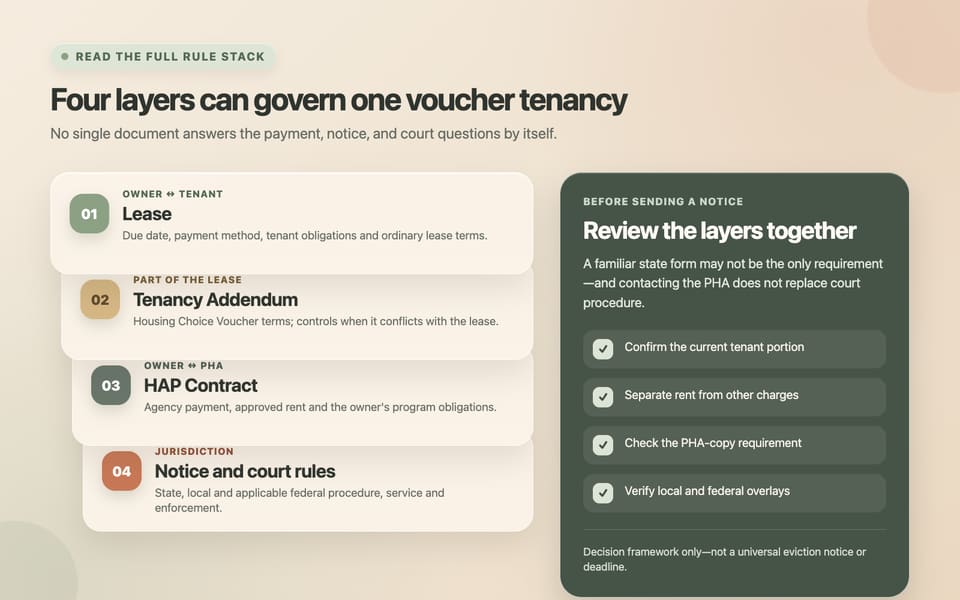
Figure 2. The payment and enforcement questions sit in different documents and legal layers that must be reviewed together.
The lease
The lease remains the agreement between owner and tenant. It should identify the rent, due date, payment method, term and other obligations. Federal rules place ordinary management and rental functions—including collecting the tenant contribution and enforcing the lease—on the owner. 24 CFR § 982.452
The Tenancy Addendum
The HUD Tenancy Addendum is attached to and becomes part of the lease. If an ordinary lease term conflicts with the addendum, the addendum controls. A landlord reviewing only the property's standard lease can therefore miss the rule that changes the answer.
The HAP Contract
The Housing Assistance Payments Contract is between the owner and the PHA. It governs the subsidy payment and the owner's program obligations. The tenant is not simply a substitute payer when the PHA side of that contract has a problem.
The law where the property is located
HUD rules do not give every landlord one national notice form or one national countdown. State law, city or county rules, the lease, property type and federal overlays can all affect what must happen before a case is filed. The court or authorized public official—not the owner—ultimately carries out a physical eviction.
The documents should be read as a stack, not as competing internet answers.
The PHA Is Part of the System, but It Is Not the Landlord
When a tenant portion is missing, contacting the PHA early can answer important questions:
- What is the household's current tenant portion?
- Did that amount change recently?
- Has the HAP been issued, adjusted, suspended or abated?
- Did the household report a loss of income?
- Is an interim reexamination pending?
- Which owner forms and contact channel does this PHA use?
- What does the PHA's Administrative Plan require?
The PHA may separately administer the household's program participation, but it does not replace the landlord in enforcing the lease. It does not automatically pay the tenant's missed portion, and a call to a caseworker does not start a state eviction case.
The owner also has a federal notice obligation to remember. Under 24 CFR § 982.310, an owner terminating a voucher tenancy must provide written notice stating the grounds and must give the PHA a copy of an owner eviction notice. The same rule says an HCV owner may evict only through court action. 24 CFR § 982.310
Those are parallel tracks:
- communicate with the PHA and satisfy HCV requirements; and
- follow the correct lease, notice, service and court procedure for the property.
Completing one track does not automatically complete the other.
A First 24–48 Hour Checklist
This is an organizational sequence, not a legal waiting period.
1. Freeze the assumptions
Do not begin with “voucher tenant did not pay rent.” Write the narrower statement the records currently support:
The ledger appears to be missing $___ for ___, and the source of that missing payment has not yet been verified.
This keeps an accounting question from becoming a legal conclusion too early.
2. Rebuild the ledger with separate columns
For every month, record:
- approved rent to owner;
- expected PHA HAP;
- HAP received date and amount;
- expected tenant portion;
- tenant payment date and amount;
- non-rent charges in a separate category;
- source document for every adjustment.
Do not silently carry an unexplained balance forward.
3. Find the current PHA rent determination
Tenant portions can change when income or household circumstances change. Confirm the effective date of the most recent determination and compare it with the month in dispute.
4. Read all three signed documents
Locate the lease, Tenancy Addendum and HAP Contract. Check:
- rent and due date;
- tenant portion and payment instructions;
- grace period or late-fee language;
- termination provisions;
- notice method and address;
- PHA-copy requirements;
- any program or property-specific addendum.
Do not assume the form downloaded today is identical to the form signed for this tenancy.
5. Ask whether income changed
A tenant who lost work or experienced another qualifying income decrease may be able to request an interim reexamination from the PHA. Federal rules address when PHAs conduct interim reexaminations and how decreases may become effective, but the facts, reporting date and PHA Administrative Plan matter. 24 CFR § 982.516
This is not a promise that the arrears will disappear. It is a reason to ask whether the amount being demanded still matches the official determination.
6. Contact the PHA using an official channel
Send a focused, factual request. Include the unit, voucher household, months in question, HAP amounts received and the tenant portion shown in your records. Ask for confirmation rather than asking the PHA to “remove” the tenant.
7. Identify every jurisdictional layer
Record the state, city and county; property type; any local rent or eviction regulation; and whether another federal notice rule may cover the dwelling. Use current court, legislative and agency sources—not a notice copied from a landlord forum.
8. Preserve communications and payment offers
Save emails, messages, portal records, receipts, returned payments, proposed payment plans and delivery records. If a conversation happens by phone, send a short written summary afterward.
9. Check the effect of partial payment before accepting or rejecting it
Partial payment can affect a pending notice or case differently depending on the state, timing, wording and amount. Do not rely on the comment-section rule that accepting one dollar always restarts an eviction everywhere.
10. Do not use self-help
Do not change locks, shut off utilities, remove belongings, block access or use threats to force a move. A notice is not a court order, and a company cannot lawfully bypass a required court process merely by calling itself an eviction service.
Why “Just Send a Three-Day Notice” Is Not a National Answer
The original case did not identify a state. That omission alone makes a universal deadline impossible.
California
California Courts describes a three-day Notice to Pay Rent or Quit for residential rent arrears. The three days exclude Saturdays, Sundays and court holidays; the notice must state the exact rent owed and required payment information; and it cannot include items such as late fees, utilities or damages. Local rules or another applicable law can add requirements. California Courts: Three-Day Notice
New York
New York follows a different sequence. The state court system says a landlord generally must send a late-rent notice when rent is at least five days overdue and serve a written rent demand giving at least 14 days before starting a nonpayment case. A defective notice or service method can cause dismissal. New York Courts: Pre-Filing Notices, New York Courts: Starting a Nonpayment Case
Texas
Texas Property Code § 24.005 generally provides at least three days' written notice to vacate before filing, but a written lease can specify a shorter or longer period. The statute's 2026 text also distinguishes certain first nonpayment situations from repeated late or delinquent payment during the same lease term. Subsidized housing may add other requirements. Texas Property Code § 24.005
These examples are not a menu from which a landlord can choose. They prove why the location and current law must be identified before the notice is drafted.
State law may also be only one clock. Certain federally covered dwellings can have additional notice requirements, and the interaction between the CARES Act, HUD program rules and later regulatory changes is not captured by the phrase “Section 8.” Confirm the property's coverage and the current rule before relying on a state form alone.
If the Tenant Can Pay Part of the Balance
A partial payment may reduce the loss and support a workable agreement. It may also change the legal effect of a notice.
California Courts, for example, says that accepting partial or full rent after the deadline in a pay-or-quit notice can make that notice no longer valid, leaving the landlord to address any remaining balance with a new notice. Other jurisdictions treat timing, reservation language, pending cases or subsidy payments differently. California Courts: Eviction Defenses
Before accepting, rejecting or returning money, determine:
- which month and charge the payment is meant to cover;
- whether it is the PHA payment or tenant payment;
- whether a notice has already been served;
- whether a case has already been filed;
- whether local law allows an enforceable reservation or repayment arrangement;
- how the payment will be shown on the ledger and receipt.
If the parties discuss a repayment plan, put the essential terms in writing:
- the agreed balance, without merging disputed charges into rent;
- payment amounts and dates;
- how new monthly rent will be handled;
- what happens if a payment is missed;
- whether any notice or case remains pending;
- whether the PHA, court or counsel must receive the agreement.
Process is not the opposite of compassion. Clear documentation can preserve a path for the tenancy to continue while preventing an informal promise from becoming another disputed fact.
A Voucher Is a Payment Structure, Not a Tenant Profile
The most troubling part of the online discussion was not disagreement over notice periods. It was the attempt to turn one nonpayment problem into a judgment about every household using rental assistance.
Voucher status does not tell a landlord whether a particular person will care for a property, communicate well or pay their portion on time. Screening should test documented tenancy risk, not serve as a coded way to exclude a protected source of income.
Federal fair-housing law does not list source of income as a standalone protected class nationwide, but states and cities may add that protection. Voucher-related policies can also intersect with federally protected characteristics. A national article therefore cannot truthfully say either “every landlord must accept Section 8 everywhere” or “landlords can always refuse it.”
California is one of the states with explicit protections. The California Civil Rights Department says housing providers generally cannot refuse an applicant, impose different terms or advertise “No Section 8” because the applicant uses a voucher. California CRD: Housing and Source of Income
California also has two especially important screening rules:
- If a financial standard uses a rent multiple, it must be applied to the tenant's portion—not the full contract rent. If the full rent is $2,500, the tenant portion is $500 and the policy requires income of three times rent, the relevant threshold is $1,500 rather than $7,500.
- If a housing provider intends to use the credit history of an applicant with a rental subsidy, the applicant must have an opportunity to present lawful, verifiable alternative evidence of the ability to pay their portion, and qualifying evidence must be considered as required by state law.
The state's official guidance explains both rules. California CRD: Fair Housing and Source of Income FAQ
That is why “set a 700 credit score for everyone” is not a universal compliance strategy. A written rule is not automatically lawful because it looks neutral on paper—especially when messages or inconsistent application show that its purpose is to screen out voucher holders.
Better screening is specific, lawful, documented and consistently administered. It may examine relevant rental history, verifiable ability to pay the applicant's actual share, references, conduct connected to tenancy and other criteria permitted in that jurisdiction. It should not rely on stereotypes, invented reasons or standards calculated against money the applicant will not owe.
A Negotiated Move-Out Is Not Permission for Self-Help
Sometimes both sides decide that continuing the tenancy is not workable. A voluntary, written move-out agreement—often called “cash for keys”—may be one possible resolution. Mediation can also help the parties resolve payment, move-out timing, possession, property condition and dismissal of a pending case.
But “voluntary” matters. The agreement should not be produced through lockouts, utility shutoffs, removal of belongings, false statements, repeated threats or pressure that local law treats as harassment. Cities may also impose disclosure, counsel, filing or reporting rules. New York City, for example, regulates how buyout offers are made and gives tenants the right to refuse contact for a period after providing written notice. NYC HPD: Buyout Agreement Law
If an eviction case has already been filed, a settlement may need to be documented through the court. California Courts recommends that mediated eviction agreements clearly state each party's obligations, deadlines, when a case will be dismissed and what happens after a breach. California Courts: Eviction Mediation
Negotiation can be a legal strategy. It is not a shortcut around legal possession.
Where Pine Can Help
The hardest early task is often not choosing a legal theory. It is turning a scattered rent problem into a record that a housing authority, property manager, mediator or local lawyer can review without rebuilding the story from scratch.
Pine can help you:
- separate PHA payments from the tenant portion in a dated ledger;
- organize the lease, Tenancy Addendum, HAP Contract, PHA determinations, payment records and messages;
- build a timeline of due dates, payment offers, notices, service attempts and responses;
- prepare focused questions for the PHA, property manager, mediator or local attorney;
- keep the next action and deadline visible while preserving alternatives such as repayment or a voluntary move-out agreement.
Open Pine to organize your rent record and next steps →
Pine does not decide which eviction notice is legally valid, calculate a jurisdiction-specific deadline, serve court papers, determine whether a screening rule is discriminatory, or replace a local housing attorney. When housing, public benefits or court deadlines are at stake, use the organized record to get qualified help faster.
The Better First Question
The online debate asked whether the landlord should be kind or start an eviction immediately. That framing creates a false choice.
A landlord can communicate with a household facing hardship while documenting the missed payment. A tenant can request a rent recalculation while remaining responsible for an amount that is still validly due. The parties can explore repayment or settlement while respecting court requirements. And a landlord can apply lawful screening standards without treating rental assistance as evidence of character.
The useful questions are concrete:
- Which payment is missing?
- What amount was the tenant actually required to pay?
- Which signed document governs it?
- Has the PHA confirmed the current determination?
- What notice and service rules apply to this property?
- What would accepting a payment change now?
- Which records will another decision-maker need next?
That is the difference between reacting to a stereotype and managing a tenancy.
A voucher is a payment structure, not a tenant profile. Good process begins by separating the money, the documents and the legal clocks before deciding what happens next.
Last reviewed: August 6, 2026. Laws, regulations, agency procedures and local court requirements can change. Verify current official sources for the property's jurisdiction before acting.