


WordPress.com
Cancel subscription
How to Cancel WordPress.com Subscription: Official Steps
Learn how to cancel or remove a WordPress.com subscription, what happens to your site, domains, and email afterward, and when refunds may still be available.
- 10 current official sources checked
- 3 billing routes separated
- Legacy Provider and equivalent Blog content reconciled claim by claim
- Steps, outcomes, refund boundaries, and related products revalidated
How to cancel WordPress.com through the correct billing owner
Web cancellation
Cancel WordPress.com through Web
 1
1Open Purchases
Sign in at WordPress.com, hover over your avatar in the upper‑right corner, and choose “My WordPress.com account.” In the left‑hand menu, select Billing, then click “Active Upgrades” to see every active plan, domain, email product, and add‑on associated with your account.
 2
2Select the WordPress.com plan
In Active Upgrades, locate the plan for the site you want to stop renewing. Confirm the site name and product (for example, a specific site plan or email service), then click its name to open the Purchase Settings page with details about renewal dates and management options.
- Let Pine handle it
Pine can help
Too many steps?
Pine can find the right Web path and handle the cancellation for you.
 3
3Choose Cancel subscription
Scroll to the bottom of the Purchase Settings page and choose the “Cancel subscription” option. On the next screen, review the summary of what cancellation will do, then select the “Cancel subscription” button again to turn off automatic renewal for this purchase.
 4
4Review the consequences and confirm
Read the explanation of how your site will change when the plan ends—such as ads returning, your address switching back to a .wordpress.com URL, or plugin and storage limits changing—then continue through the short survey until WordPress.com shows confirmation. Back on the Active Upgrades list, verify that the item now shows an expiry date instead of an upcoming renewal.

iOS cancellation
Cancel WordPress.com through iOS
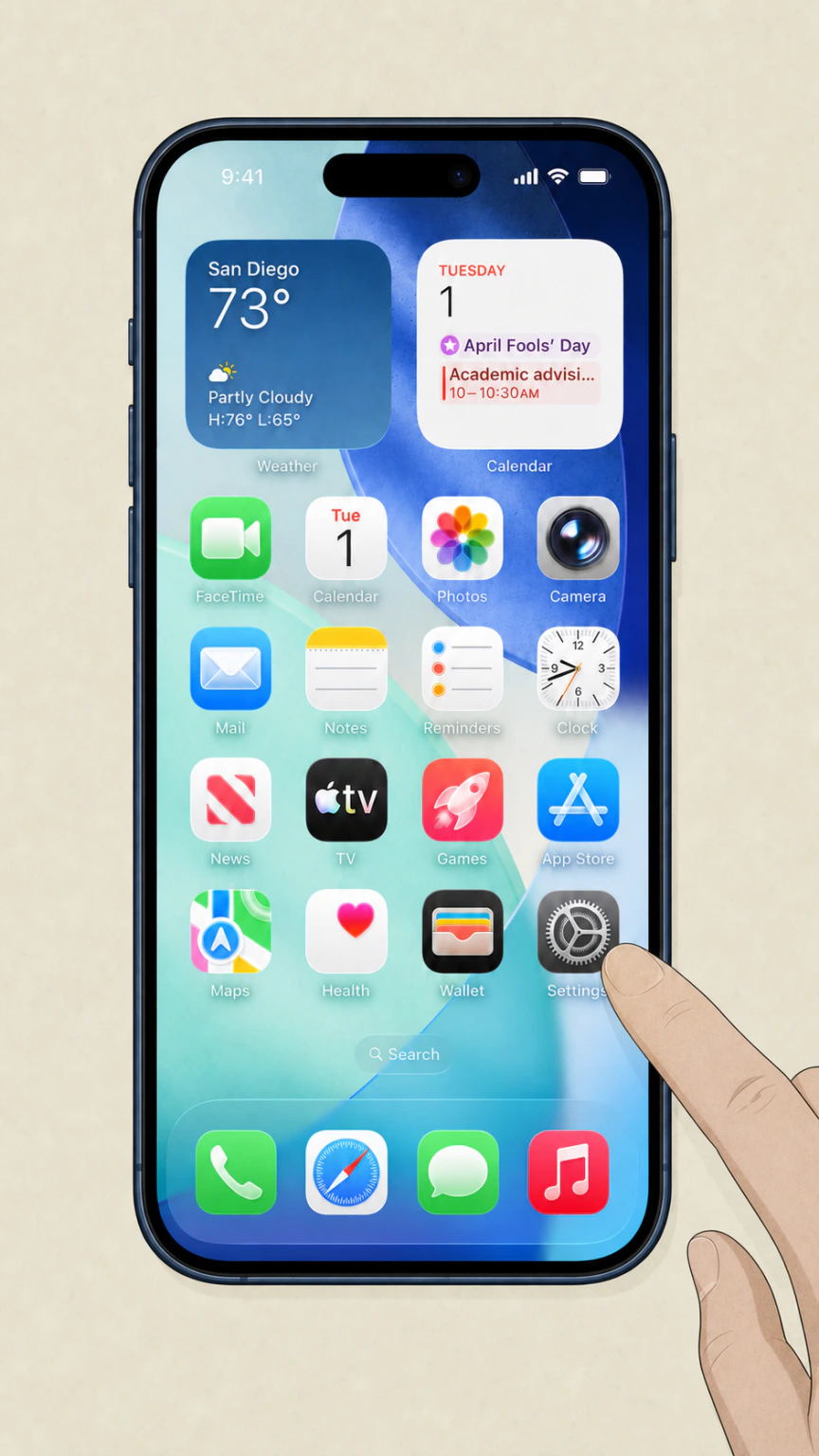 1
1Open Settings
Unlock your iPhone or iPad and tap the grey Settings app icon on your home screen. You manage App Store billing and subscriptions from the iOS Settings app, not from the WordPress or Jetpack mobile apps.
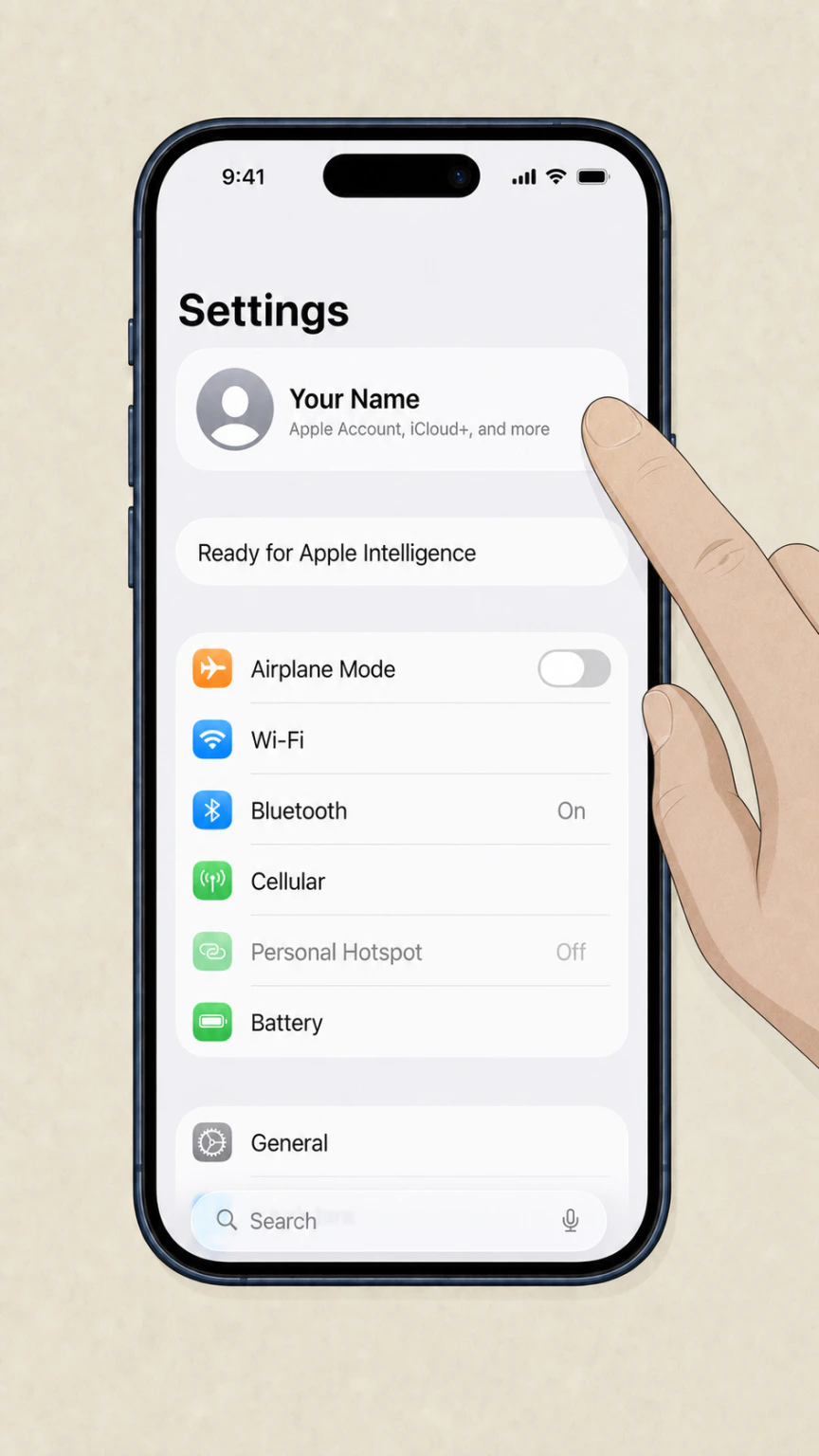 2
2Tap your name
At the top of Settings, tap the row that shows your name and Apple ID banner. This opens your Apple account settings, where you can see options such as iCloud, Media & Purchases, and Family Sharing.
- Let Pine handle it
Pine can help
Too many steps?
Pine can find the right iOS path and handle the cancellation for you.
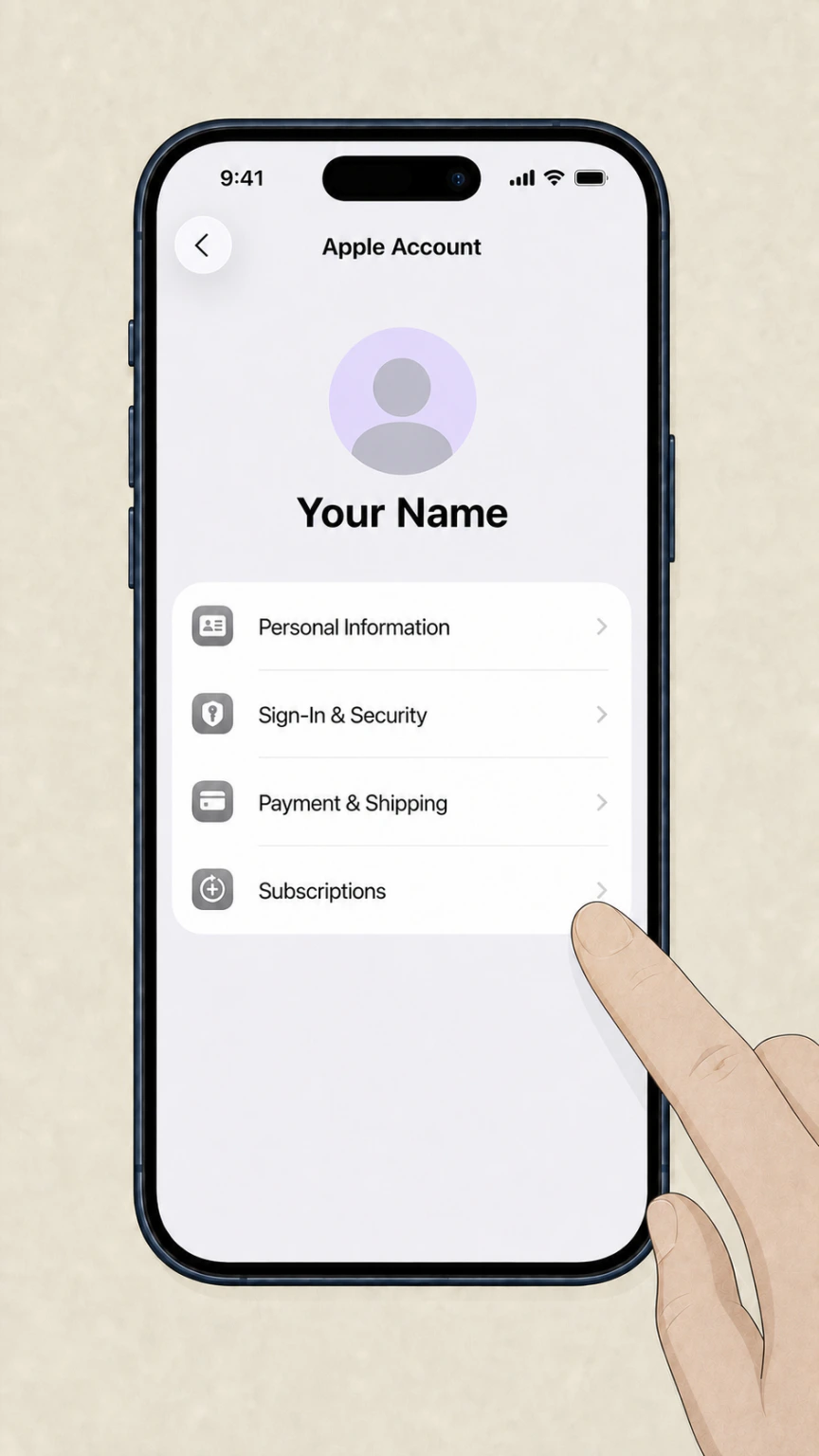 3
3Open Subscriptions
In your Apple ID screen, tap “Subscriptions.” On some versions of iOS you may first need to tap “Media & Purchases” and then choose “Subscriptions.” Wait for the list of active and expired App Store subscriptions to load.
 4
4Choose WordPress.com
Scroll through the Active list and tap the entry that corresponds to WordPress.com, Jetpack, or the relevant Automattic app if it appears. This opens the subscription details page with the current renewal date, price, and available management options.
 5
5Tap Cancel Subscription and confirm
On the subscription details page, tap “Cancel Subscription” (or a similar option such as “Cancel Free Trial” where shown). Read the confirmation message, then tap Confirm to stop future renewals through Apple. The subscription remains available until the end of the current billing period, and Apple will show the revised end date in this screen.
Google Play cancellation
Cancel WordPress.com through Google Play
 1
1Open Google Play
On your Android phone or tablet, open the Google Play Store app from your home screen or app drawer. Ensure you are signed into the same Google account that is being billed for the subscription you want to cancel.
 2
2Open Payments & subscriptions
In Google Play, tap your profile picture or initial in the top‑right corner to open the account menu. From the list of options, choose “Payments & subscriptions” to see billing‑related settings and history for this Google account.
- Let Pine handle it
Pine can help
Too many steps?
Pine can find the right Google Play path and handle the cancellation for you.
 3
3Open Subscriptions
Within Payments & subscriptions, tap “Subscriptions.” Google Play will display all active and expired subscriptions linked to this Google account, including any WordPress‑related in‑app subscriptions if you have them.
 4
4Choose WordPress.com
In the Subscriptions list, find the entry that corresponds to WordPress.com, Jetpack, or the relevant Automattic app and tap it. This opens the subscription detail view, showing the next charge date, payment method, and available management actions.
 5
5Tap Cancel subscription and confirm
On the subscription detail page, tap “Cancel subscription.” Review the explanation of when billing will stop and which features will end, then follow the prompts to confirm. Google Play will mark the subscription as set to cancel at the end of the current period and display the final access date.
Refund policy
WordPress.com refunds after you cancel or remove a subscription
Refunds on WordPress.com depend on the product type and when you act. Cancelling by itself only stops auto‑renewal; a refund usually requires that you are within the documented refund period and remove the purchase using the refund flow in your Billing → Active Upgrades area.
Check my refund options- Standard plan refund periods
- Annual, two‑year, and three‑year WordPress.com plans are generally refundable within 14 days of purchase or renewal, while monthly plans are refundable within 7 days. Within those windows, you can normally remove a plan and receive a full refund; outside them, cancelling simply prevents further renewals without returning past charges.
- Domain refund boundaries
- Domain registrations and renewals are typically refundable only if you cancel the domain within 96 hours of registration or renewal. When a refunded plan included a free domain credit, cancelling within those 96 hours can produce a full plan refund; cancelling later often results in a plan refund reduced by the standard domain cost if you keep the domain.
- Add‑ons, premium plugins, and partner themes
- Many add‑ons, premium plugins, and partner themes follow similar refund windows—commonly 14 days for annual subscriptions and 7 days for monthly ones—though exact rules are listed in the Refund a purchase guide. As with plans, these refunds are not prorated outside the published periods.
- Refund mechanics and timing
- To claim a refund, you normally open the purchase under Billing → Active Upgrades, use Cancel subscription, and choose “Remove and claim refund” if the purchase is eligible. Successful refunds are recorded immediately in your WordPress.com billing history, while the funds typically return to your original payment method within several business days.
- Recurring Payments and third‑party purchases
- Recurring Payments you make on other sites, WooCommerce.com extensions, and plugins bought directly from third parties are governed by the policies of those providers, not the WordPress.com main refund policy. In those cases, WordPress.com documentation points you to the site owner or external provider’s refund process instead.
If you are close to the end of a refund window or your order includes both a plan and a domain, review the Refund a purchase guide and, if anything is unclear, contact WordPress.com support before removing products so you understand how much will actually be refunded. Review WordPress.com’s refund guide
How cancellation works
Cancel, remove, or just turn off auto‑renew?
WordPress.com distinguishes between cancelling a subscription, removing it immediately, and simply turning off automatic renewal. Understanding the differences helps you avoid unintentionally losing features or forfeiting refund eligibility.
Cancel subscription (standard end‑of‑term)
From Billing → Active Upgrades, opening a purchase and using “Cancel subscription” turns off auto‑renewal. The plan, domain, or add‑on stays active until its current expiry date, after which it ends and its features are removed or limited according to the free plan rules.
Remove subscription immediately
If a purchase is within its refund window, the cancellation screen may show a “Remove and claim refund” option. Choosing this removes the subscription right away, forfeits any remaining time, and automatically processes any refund you qualify for under WordPress.com’s refund policy.
Auto‑renew toggle as an alternative
In many cases you can visit Billing → Active Upgrades, open a purchase, and simply toggle “Enable auto‑renew” off instead of using the Cancel subscription button. WordPress.com treats this the same way as cancelling: the subscription runs to its expiry date, then ends without renewing.
What removal means for plugin‑enabled plans
On plugin‑enabled plans, removing a plan immediately also removes all plugins and plugin‑created content, reverting the site to how it looked before plugins and custom code were added. The site is made private during this process so you can review changes before making it public again.
After your plan ends
What happens to your WordPress.com site after cancellation
Ending a WordPress.com plan changes how your site looks and what tools you can use, but your content usually remains available. These are the key effects once a plan is removed or expires.
Site reverts to the free plan
When a paid plan is removed or expires, your site continues to function but reverts to a free WordPress.com site. Posts, pages, and media files remain, but features that require a paid plan—such as certain design tools, higher storage limits, or plugins—are no longer available.
Ads appear again on free sites
Free WordPress.com sites display WordPress.com‑served advertising. After your paid plan ends, those ads will start appearing again, because ad‑free browsing is a benefit of paid site plans rather than the free tier.
Site address changes back to .wordpress.com
If you were using a custom domain as your primary address with a paid plan, ending that plan causes the site to use its .wordpress.com address again. You can keep your custom domain attached if you still pay for the domain itself, but the site’s default address reverts to the free subdomain unless you maintain a paid plan that supports mapping.
Media, storage, and uploads
Existing images, audio, and video stay online after your plan ends. However, if your site’s stored media exceeds the free storage allowance, you may not be able to upload new files until you either upgrade again or free up space by deleting media.
Plugins and third‑party themes on business‑level plans
If a plugin‑enabled plan is removed immediately, all plugins and third‑party themes are removed along with any plugin‑generated content; if you only cancel and allow it to expire, they remain until the expiry date. Afterward, the site returns to using only WordPress.com themes and features supported on the free tier.
Domains & email
Handling domains and email when cancelling
Domains and email services are billed as separate subscriptions. Cancelling a site plan does not automatically cancel a custom domain or associated email; you manage and refund those products under their own rules.
Plan cancellation does not cancel your domain
If your site uses a custom domain registered through WordPress.com, cancelling the site plan alone will not cancel the domain registration. You continue to own and be billed for the domain until you cancel or transfer it from Upgrades → Domains or from the relevant entry under Billing → Active Upgrades.
Domain refunds within 96 hours
Domain registrations and renewals are generally refundable only if the domain is cancelled within 96 hours of registration or renewal. After that, you can still cancel the domain to end future renewals, but the current registration period is normally not refundable under WordPress.com policy.
Free domain included with a plan
If you used a free‑domain credit from an annual, two‑year, or three‑year plan and later request a refund, you can either cancel the domain within the 96‑hour domain window for a full plan refund, or keep the domain and receive a plan refund minus the domain’s regular registration cost.
Email products are separate subscriptions
Google Workspace and Professional Email mailboxes purchased through WordPress.com are separate subscriptions with their own refund windows. Cancelling a site plan does not automatically cancel these; you must manage, cancel, or renew them individually from Billing → Active Upgrades or the Domains / Email screens.
Removing vs cancelling a domain
From the Domains screen, removing (detaching) a domain only disconnects it from a specific site while leaving the registration active; cancelling a domain ends your ownership of the name itself. If you intend to use the domain elsewhere, detach or transfer it rather than cancelling the registration.
Refund options
Refund boundaries for WordPress.com subscriptions
Refunds on WordPress.com depend on what you purchased and when you cancel or remove it. Cancelling alone does not create a refund; you must be within the published refund window and, for most items, use the removal flow that processes a refund automatically.
Plans: 14‑day and 7‑day refund windows
Most annual, two‑year, and three‑year WordPress.com plans are refundable within 14 days of purchase or renewal. Monthly plans are refundable within 7 days. Outside those windows, cancelling stops future renewals but you normally will not receive any refund for remaining time.
Domains: short refund period and special handling
Domain registrations and renewals are refundable only if cancelled within 96 hours of the transaction. Refunds for plans that included a free domain may be reduced by the standard domain cost if you keep the domain after that 96‑hour window.
Add‑ons, premium plugins, and partner themes
Many add‑ons, premium plugins, partner themes, and some services are refundable within 14 days on annual billing and 7 days on monthly billing, mirroring the plan rules. Always check the current Refund a purchase guide for product‑specific windows before you remove something to claim a refund.
How to trigger a refund in the dashboard
To request a refund for an eligible WordPress.com purchase, open it from Billing → Active Upgrades, choose “Cancel subscription,” and on the next screen select “Remove and claim refund” if that link appears. Continuing through this removal flow both ends the subscription and applies the refund automatically.
No prorated refunds beyond the window
WordPress.com refunds are not prorated. If, for example, you cancel a 12‑month plan after nine months and are outside the 14‑day (annual) or 7‑day (monthly) window, you normally will not receive any refund for the unused months; the plan simply runs to its paid‑through date or ends immediately if removed without refund eligibility.
Fixing issues
Troubleshooting missing or blocked cancellation options
If you cannot see a Cancel subscription button or encounter an error while cancelling, it usually points to account ownership, browser issues, or a different billing route such as Recurring Payments or app‑store billing.
Check you’re in the right account and site
Only the WordPress.com account that purchased a subscription can cancel or remove it. If you don’t see the expected plan under Billing → Active Upgrades, verify you’re logged into the correct WordPress.com account and have selected the site that actually owns the purchase.
Ownership restrictions on cancelling
If you see a message such as “There was a problem cancelling — contact support,” confirm that you are the user who originally bought the subscription. Collaborators or additional users on a site cannot cancel a plan purchased by someone else; the purchaser must cancel from their own account.
Browser or session problems
If the cancellation screen fails to load or errors repeatedly, refresh the Billing page, then try again in a different browser or a private/incognito window. Extensions or stale session data can interfere with the cancellation and refund forms in the WordPress.com dashboard.
Recurring Payments vs site plans
Subscriptions you’ve bought on someone else’s WordPress.com site using Recurring Payments do not appear under Active Upgrades; they’re listed under Billing → Monetize subscriptions. To cancel those charges, open Monetize subscriptions from your account billing menu, select the relevant subscription, and click Cancel there.
When to contact WordPress.com support
If you still cannot cancel after checking ownership, using an incognito browser, and locating the correct billing section, gather a screenshot of the error and the exact name of the subscription, then contact WordPress.com support through the links in the cancellation or refund guides so staff can assist and, where eligible, cancel and refund for you.
Other options
Alternatives to cancelling your WordPress.com plan
Depending on your goals, you may not need to cancel your plan entirely. WordPress.com offers options to change renewal behavior, downgrade, or adjust your site without ending your subscription.
Turn off auto‑renew without removing features now
If you simply want to avoid future charges but keep your current features until the paid‑through date, you can toggle off “Enable auto‑renew” on the purchase’s Manage subscription panel instead of removing it. The plan will stay active until its expiry date and then end automatically.
Downgrade instead of cancelling
Within the published refund period, you can often downgrade to a lower‑tier plan and receive an automatic partial refund of the price difference, as long as you follow the downgrade instructions from the Manage purchases guides. This can reduce ongoing costs while preserving core paid features.
Revert to a free site without deleting it
If you no longer need paid features but still want the content, you can cancel your plan so the site reverts to the free tier with a .wordpress.com address and ads. You can also make the site private instead of deleting it, keeping it accessible only to you or invited viewers.
Transfer the site to another owner
If your main concern is that you no longer want to manage or pay for a site, you can transfer it—and, where applicable, its purchases—to another WordPress.com account instead of cancelling outright, using the site and domain transfer tools documented in the Manage your purchases and Domains guides.
Delete the site or close the account only as a last step
Deleting a site or permanently closing your WordPress.com account are separate actions from cancelling subscriptions. Before using those options, WordPress.com recommends cancelling or removing all active purchases and considering less permanent alternatives like making the site private or resetting it.
Accounts & data
Account, site deletion, and data after cancellation
Cancelling a WordPress.com subscription interacts with, but is distinct from, deleting sites or closing accounts. Understanding these boundaries helps avoid unexpected loss of access or data.
Cancelling a plan does not delete your site or account
Ending a plan or add‑on only affects that subscription. Your WordPress.com account remains open, and the site continues to exist—usually as a free site—unless you separately delete the site or close the account through the dedicated deletion workflows.
Site deletion is permanent for its address
Deleting a WordPress.com site permanently removes its content and prevents reuse of its original .wordpress.com address. Before deletion, WordPress.com advises removing active purchases, exporting content, and considering alternatives such as making the site private or transferring it to another account.
Required cancellation before closing an account
To permanently close a WordPress.com account, you must first cancel all active plans, domains, and other purchases from your Active Upgrades page. The account‑closure guide links back to the subscription‑removal instructions and will not complete closure until all recurring billing has been stopped.
Restoring a deleted site or closed account
Deleted sites can usually be restored within 30 days from the Hosting Dashboard by filtering for deleted sites and using the Restore option. Closed accounts can similarly be restored for 30 days via the “Restore account” link in the deletion‑confirmation email before associated data is permanently purged.
Backups and exports before major changes
For plugin‑enabled sites in particular, WordPress.com recommends downloading a backup or exporting content before cancelling or removing a plan. This ensures you have a copy of custom content or functionality that may be removed when plugins and advanced features are disabled.
Paying creators
Cancelling subscriptions you bought on other WordPress.com sites
If you subscribe to newsletters, memberships, or other paid content on someone else’s WordPress.com site, those charges are managed through WordPress.com Recurring Payments rather than your own site plan.
These payments go to site owners, not WordPress.com
When you start a Recurring Payments subscription, you are buying directly from the site owner; WordPress.com only processes and manages the payment. The amount and renewal period are set by the site owner and shown during checkout.
Where to find your subscriptions
Log in to your WordPress.com account, open your account dashboard, and go to Billing → Monetize subscriptions. There you will see a list of websites you support and the active subscriptions and payments associated with each site.
How cancellation works for Recurring Payments
To stop a recurring payment, open Billing → Monetize subscriptions, select the subscription you no longer want, and click Cancel. The subscription ends immediately, you stop being charged, and you typically lose access to the protected content or benefits associated with that subscription right away.
Refunds for Recurring Payments are handled by site owners
Refunds for Recurring Payments subscriptions are not covered by the main WordPress.com refund policy. Because the transaction is between you and the site owner, you must consult the site’s own refund policy or contact the owner directly to request any refund.
WordPress.com cancellation FAQ
Provider-specific answers based on official sources checked August 10, 2026. Signed-in terms, region, billing owner, and applicable law still control.
Does cancelling my WordPress.com plan delete my website?
How can I confirm that my WordPress.com subscription is really cancelled?
What’s the difference between cancelling a plan and turning off auto‑renewal?
How do I cancel a domain I no longer need on WordPress.com?
If my plan included a free domain, what happens to that domain when I cancel?
Can WordPress.com cancel subscriptions I make on someone else’s site?
What’s the difference between cancelling my plan and closing my WordPress.com account?
Can I restore my plan or site after I cancel or it expires?
Untangle this WordPress.com issue.
Let Pine handle the provider follow-up and keep the confirmation in one place.
