

Malwarebytes
Cancel subscription
How to Cancel Malwarebytes Subscription: Official Steps
Cancel Malwarebytes through its account portal, the App Store, or Google Play; check renewal timing, device protection, license changes, and eligible refunds.
- 21 current official sources checked
- 3 billing routes separated
- Legacy Provider and equivalent Blog content reconciled claim by claim
- Steps, outcomes, refund boundaries, and related products revalidated
How to cancel Malwarebytes through the correct billing owner
Web cancellation
Cancel Malwarebytes through Web
 1
1Open My Account
In a web browser, go to the Malwarebytes account sign‑in page (for example, from your purchase email or the Malwarebytes website), enter the email and password associated with your online‑store purchase, and sign in so you can see your dashboard and billing options.
 2
2Open the Subscriptions tab
From the left sidebar of your Malwarebytes account, choose the area that shows your plans, such as “Manage Subscription” or the Subscriptions dashboard, so you can view each active Malwarebytes subscription and the devices attached to it.
- Let Pine handle it
Pine can help
Too many steps?
Pine can find the right Web path and handle the cancellation for you.
 3
3Choose Manage subscription
Locate the Malwarebytes subscription you want to cancel, then use the subscription card controls—such as the three‑dot menu or Billing & payment link—to open that subscription’s detailed management or payment page in a new panel or pop‑up.
 4
4Turn off auto-renewal and confirm
On the payment or subscription management page, use the control labeled to manage auto‑renewal to turn it off, select a cancellation reason if prompted, and submit your choice; keep the on‑screen confirmation and follow‑up email as proof that auto‑renewal has been disabled for that subscription.

iOS cancellation
Cancel Malwarebytes through iOS
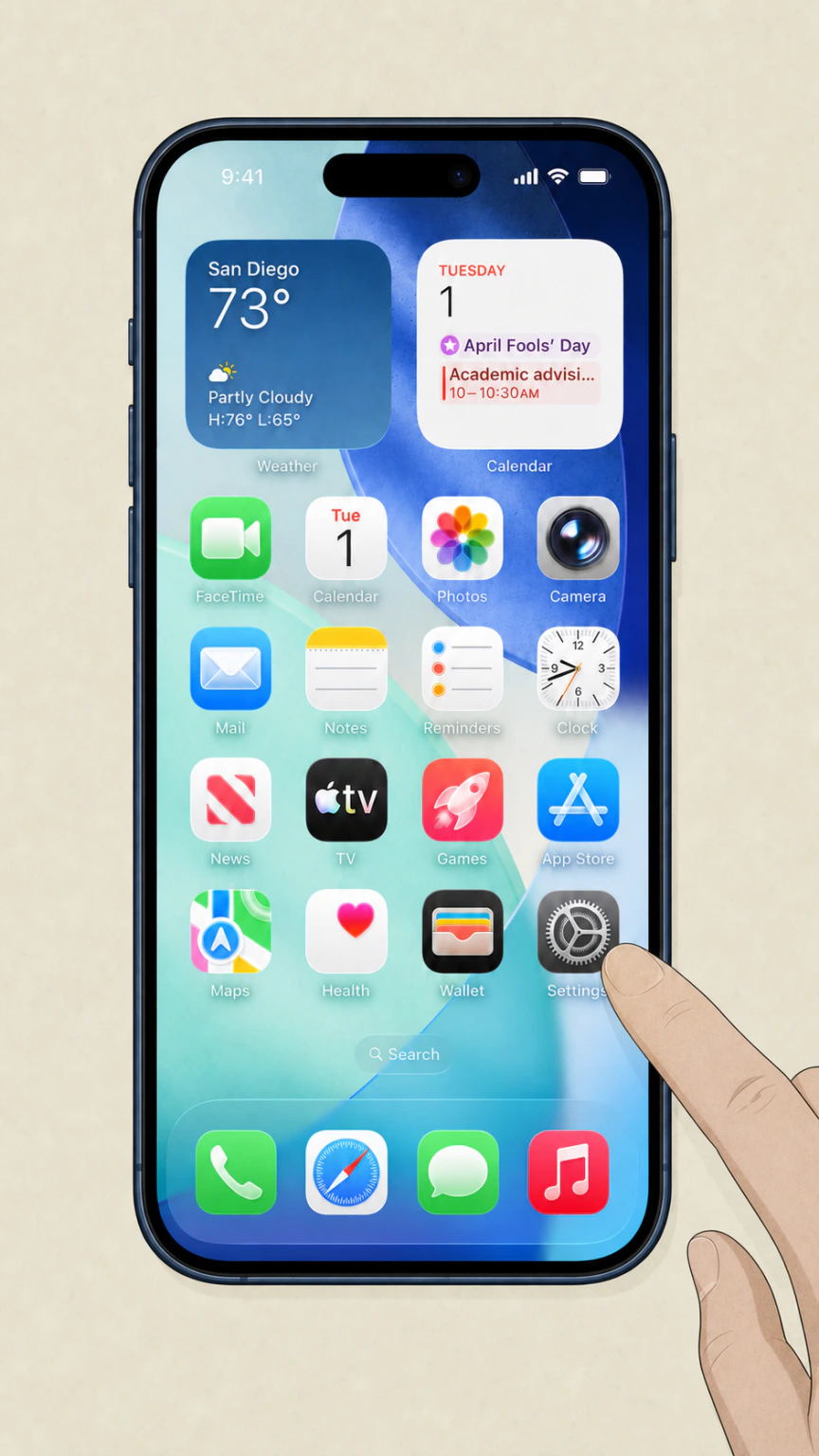 1
1Open Settings
On your iPhone or iPad, tap the Settings app to open the system settings where Apple keeps account and subscription controls for in‑app purchases like Malwarebytes.
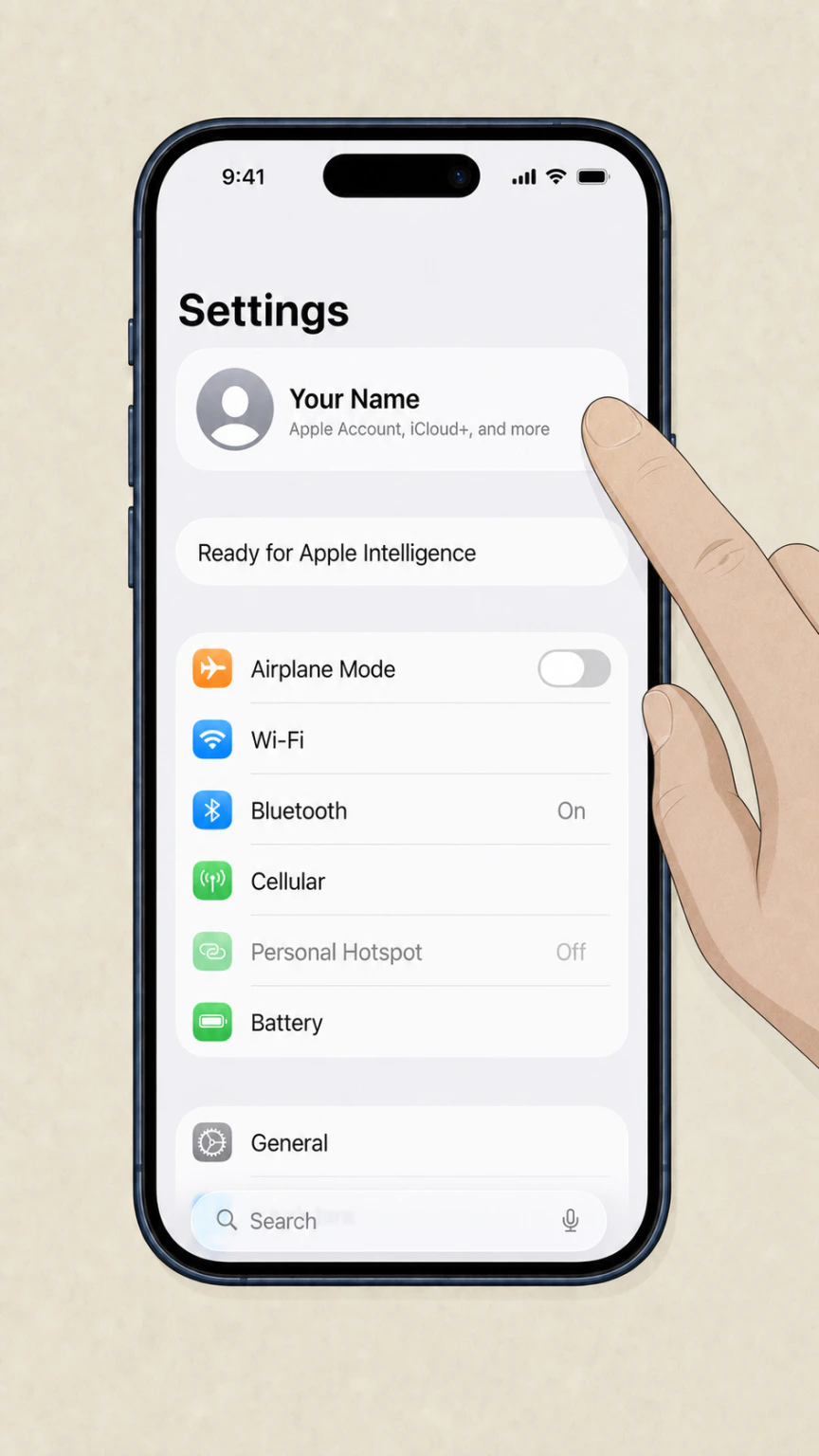 2
2Tap your name
At the top of Settings, tap your Apple ID banner (showing your name and avatar) to open the account area that includes options for media, purchases, and subscriptions tied to this Apple ID.
- Let Pine handle it
Pine can help
Too many steps?
Pine can find the right iOS path and handle the cancellation for you.
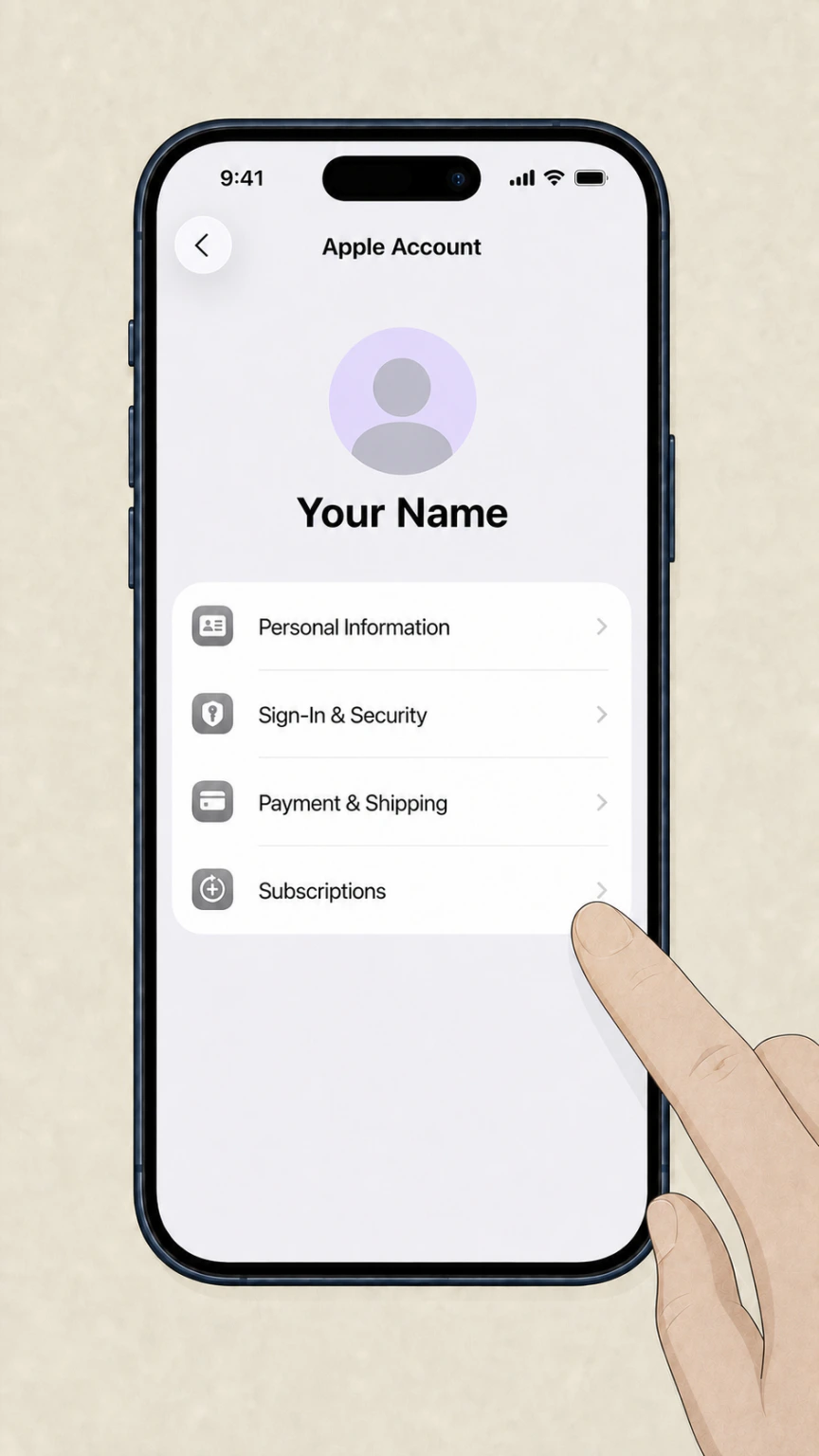 3
3Open Subscriptions
In your Apple ID settings, look for the Subscriptions option and tap it (on some versions it may appear under a “Media & Purchases” section) to load the list of active and expired subscriptions managed by Apple for this account.
 4
4Choose Malwarebytes
Scroll through the list of subscriptions, select the Malwarebytes entry, and review the details so you can confirm which plan, renewal date, and Apple ID are associated with this Malwarebytes subscription before cancelling.
 5
5Tap Cancel Subscription and confirm
In the Malwarebytes subscription screen, use the Cancel Subscription option (or equivalent cancellation control), follow Apple’s prompts to confirm, and check that the page updates to show an end date instead of a next billing date, indicating that Apple will stop future renewals for Malwarebytes on this Apple ID.
Google Play cancellation
Cancel Malwarebytes through Google Play
 1
1Open Google Play
On your Android device, open the Google Play Store app while signed into the Google account you used to buy Malwarebytes so you can manage that account’s subscriptions.
 2
2Open Payments & subscriptions
In the Play Store, tap your profile icon, then choose the Payments & subscriptions area to reach Google’s billing controls, including your list of recurring app subscriptions.
- Let Pine handle it
Pine can help
Too many steps?
Pine can find the right Google Play path and handle the cancellation for you.
 3
3Open Subscriptions
From the Payments & subscriptions menu, tap Subscriptions to display all active and past subscriptions tied to the signed‑in Google account, including Malwarebytes if it was purchased on this account.
 4
4Choose Malwarebytes
Find Malwarebytes in the subscriptions list, tap it to open its details screen, and confirm you’re looking at the right plan and Google account by checking the renewal information shown there.
 5
5Tap Cancel subscription and confirm
From the Malwarebytes subscription details screen, use Google Play’s Cancel subscription option, follow the prompts explaining what will change, and finish the confirmation so Google marks the Malwarebytes subscription as cancelled and stops future renewals on this Google account.
Refund policy
Malwarebytes refunds and money-back guarantees
Refunds for Malwarebytes depend on where you bought your subscription. Malwarebytes handles refund eligibility for Online Store purchases through Support, while app store purchases follow Google Play and Apple App Store policies. A money‑back guarantee is advertised for personal plans, but specific terms, timeframes, and exclusions are governed by the personal products refund policy and Software License Agreement rather than the cancellation screens themselves.
Check my refund options- Online Store refunds are requested through Malwarebytes Support
- The Malwarebytes Personal products refund policy explains that customers should consult the Software License Agreement and contact Support to learn whether their direct Malwarebytes purchase or renewal qualifies for a refund; self‑service cancellation alone does not automatically trigger a refund of past charges.
- Google Play and Apple App Store control refunds for in-app purchases
- Malwarebytes notes that additional exclusions and restrictions may apply for Google Play and Apple App Store purchases, and that subscriptions through these channels are subject to each store’s refund policies; customers seeking refunds for those orders must follow Google or Apple processes, though Malwarebytes Support can still advise.
- Android-specific guidance points to Google Play tools
- For Malwarebytes on Android, Malwarebytes’ dedicated article instructs customers to cancel subscriptions and learn about refunds through the Google Play Store app, and to contact Malwarebytes Support with questions about how Malwarebytes’ own refund policy interacts with Google’s rules.
- Money-back guarantee is marketed but detailed terms are elsewhere
- Malwarebytes’ pricing page promotes a money‑back guarantee for personal plans as part of its offer, but it does not list detailed conditions in the pricing table; customers should treat this as a general promise that is further defined by the formal refund policy and licensing terms, not as a substitute for those documents.
Review Malwarebytes’ official refund policy and then contact Support from the Help Center or your account if you believe your direct purchase might qualify for a refund. Open Malwarebytes refund policy
Scope of cancellation
What cancelling Malwarebytes actually changes
Malwarebytes distinguishes cancelling future billing from managing devices or uninstalling apps. These points explain what you are and are not doing when you cancel a subscription.
Auto-renewal off equals subscription cancellation for Online Store purchases
For subscriptions bought from the Malwarebytes Online Store, turning off auto‑renewal from your Malwarebytes account payment page is how you cancel; Malwarebytes confirms that cancelled subscriptions remain active and valid until their expiration date, after which billing stops and protection tied to that subscription ends.
Deactivating a device does not cancel billing
Using the Deactivate device option in your Malwarebytes account or in the app only removes that device from the subscription and signs it out, freeing a seat or preparing for transfer; Malwarebytes notes that this does not cancel the subscription itself or stop recurring charges.
Deleting an in-app Malwarebytes account profile is different from cancellation
On iOS, deleting your Malwarebytes account profile from within the app removes account linkage for features like activating other devices, but Malwarebytes clarifies that this does not impact the underlying subscription, which continues to be billed until cancelled through your Malwarebytes account or app store.
App store subscriptions must be cancelled at the store level
Malwarebytes explains that Android and iOS subscriptions purchased through Google Play or Apple App Store cannot be managed or upgraded from a Malwarebytes account; cancelling in these cases means using each store’s subscription management tools, even if you also link the subscription to a Malwarebytes account for activation.
End-of-term effects
What happens after your Malwarebytes subscription ends
Once you cancel future renewals, Malwarebytes products and add‑ons behave differently depending on where you bought the subscription and which features are attached.
Online Store subscriptions run until their expiration date
Malwarebytes states that when you cancel a Windows or Mac subscription by turning off auto‑renewal in your Malwarebytes account, the subscription remains active and valid until its existing expiration date, so you retain premium protection during that period even though no further renewals are scheduled.
Apps revert to free or limited mode when no subscription is active
Malwarebytes documentation for its mobile apps explains that without an active subscription, advanced features in Malwarebytes Mobile Security require a valid plan; when a device is deactivated or no longer covered, the app reverts to a free state where only limited features such as basic scanning may remain available.
Personal Data Remover scanning stops when the add-on lapses
For the Personal Data Remover add‑on, Malwarebytes notes that cancelling or failing to renew stops active scanning for new data broker listings; profiles previously marked In Progress change to Exposed in your dashboard, although removal requests already submitted continue to be processed in the background.
Previously linked devices and account access remain
Cancelling a subscription does not close your Malwarebytes account; your Secure Hub and Subscriptions dashboards continue to show your subscriptions, past activations, and eligible services, which you can later reactivate, upgrade, or replace with a new subscription if you decide to return.
Trials
Trials, renewal reminders, and how they interact with cancellation
Malwarebytes offers trial periods and renewal reminders that interact with cancellation in specific ways, especially for Online Store subscriptions.
Yearly plans send renewal reminders before charging
For yearly subscriptions purchased through the Malwarebytes Online Store, Malwarebytes explains that it sends a renewal reminder email about 30 days before the renewal date, including the amount that will be charged to the authorized payment method if auto‑renewal remains enabled.
Trials that require payment details must be cancelled like paid plans
Some Malwarebytes subscription trials ask you to provide payment information up front; Malwarebytes says you can and should turn off auto‑renewal in your Malwarebytes account before the end of the trial period if you do not wish to be charged when the trial converts to a paid subscription.
Trials without payment details do not auto-charge
Malwarebytes clarifies that other trial offers which do not collect payment information will not initiate a charge at the end of the trial, even if you do not explicitly cancel; you simply lose access to the premium features when the trial expires unless you purchase a subscription.
Mobile trials are controlled by app stores
If you start a Malwarebytes trial on Android or iOS through Google Play or Apple App Store, Malwarebytes notes that you must manage or cancel that trial through the respective store, following Google or Apple’s trial and renewal terms instead of your Malwarebytes account’s billing settings.
Refunds
Refunds, guarantees, and who decides
Malwarebytes directs customers to different places for refunds depending on where the subscription was purchased, and emphasizes that eligibility is determined case by case.
Online Store refunds are handled by Malwarebytes Support
For personal products, Malwarebytes’ refund policy points customers to its Software License Agreement and instructs them to contact Support to evaluate refund eligibility for purchases made directly from Malwarebytes, including subscription renewals and initial orders.
App store refunds follow Google and Apple policies
Malwarebytes notes that additional exclusions and restrictions may apply to orders purchased through Google Play or Apple App Store, and that subscriptions bought through these vendors are subject to their own refund policies and terms; its help center links to Google and Apple’s refund documentation for details.
Android refund questions start with Google Play and Malwarebytes support
In the Android‑specific article, Malwarebytes tells customers that subscription cancellation, payment updates, and refund requests for purchases made on Google Play are handled through the Google Play Store app, and it encourages users to contact Malwarebytes Support with questions about how its refund policy applies.
Malwarebytes advertises a money-back guarantee for personal plans
On its pricing page, Malwarebytes highlights a money‑back guarantee for personal subscriptions; however, specific durations, eligibility requirements, and any exceptions are further governed by the personal products refund policy and the Software License Agreement rather than detailed in the cancellation flow itself.
Where you bought it
Online Store subscriptions versus Apple and Google purchases
How you cancel and who can change your billing depends heavily on whether your Malwarebytes subscription came from the Malwarebytes Online Store or from an app store.
Only Online Store subscriptions are fully manageable in My Account
Malwarebytes describes how the Manage Subscription page in your Malwarebytes account lists your current subscriptions, devices, and billing methods, and it links from there to auto‑renew controls and payment updates; this management applies to subscriptions tied to the Malwarebytes Online Store or registered license keys.
Google Play and Apple App Store plans cannot be managed from My Account
Malwarebytes repeatedly cautions that subscriptions purchased from Google Play or the Apple App Store cannot be managed or upgraded from your Malwarebytes account; you must use Google or Apple’s subscription tools to cancel or modify those plans even if you use a Malwarebytes account for activation.
Linking license keys and app store plans to an account is optional
If you purchased Malwarebytes from a retail store or another website, Malwarebytes recommends creating an account and adding the license key so you can manage devices and, when applicable, see subscription information, even though some store‑billed plans remain controlled by the app store that sold them.
Support can still assist regardless of billing platform
Malwarebytes’ subscription and payment support article notes that its Support team can help with refund requests, automatic renewal management, unrecognized charges, and billing updates, even when the underlying charge originates from a payment processor or app store, though final decisions may follow platform‑specific rules.
Extras and bundles
Handling add-ons like Personal Data Remover when cancelling
Some Malwarebytes bundles include additional services such as Personal Data Remover; cancelling or letting your main subscription lapse affects these services in specific ways.
Personal Data Remover uses the same auto-renewal controls
Malwarebytes explains that you manage and cancel your Personal Data Remover subscription from your Malwarebytes account by disabling auto‑renewal, using the same Manage auto‑renewal flow described for other Online Store subscriptions, rather than a separate cancellation mechanism inside the add‑on dashboard.
Scanning stops but past removal requests keep processing
When Personal Data Remover is cancelled or not renewed, Malwarebytes states that the service stops actively scanning for new data broker listings; affected profiles change from In Progress to Exposed, but any removal requests already submitted continue being processed even though the subscription is no longer active.
Bundle visibility remains in your account after cancellation
Even after you cancel or allow a bundle including Personal Data Remover to expire, the Personal Data Remover dashboard in your Malwarebytes account continues to display your profiles and their last known status, which helps you confirm what data removal work was already initiated before cancellation.
Sharing and add-on seats are separate from cancellation
Malwarebytes allows some subscriptions to be shared with other people; cancelling the underlying subscription by turning off auto‑renewal stops future billing for the whole bundle, including shared add‑on seats, rather than requiring you to individually revoke each invitee’s access before the term ends.
Other options
Alternatives to full cancellation in Malwarebytes
If your goal is to reduce charges, move protection between devices, or stop using Malwarebytes temporarily, you may not need to cancel your subscription outright.
Deactivate individual devices instead of cancelling the whole plan
Malwarebytes lets you deactivate a device from your subscription using either the app or your Malwarebytes account; this frees up a seat or stops that device from using the paid features while keeping the subscription and other protected devices active.
Transfer or add devices through the Subscriptions dashboard
From the Subscriptions or Secure Hub pages in your Malwarebytes account, you can activate protection on new devices or transfer existing seats, allowing you to reassign coverage to the devices that still need it instead of cancelling the overall subscription.
Upgrade or reduce devices through account management
Using the Manage Subscription and Add devices or upgrade tools, Malwarebytes allows you to change the number of devices or the type of plan you have, subject to eligibility; adjusting your subscription may be a better option than cancelling if you simply want fewer devices under protection.
Share a subscription with others
For eligible plans, Malwarebytes’ Share a subscription feature lets you invite family or friends via email so they can install Malwarebytes under your existing subscription, increasing the value you get from the plan without needing to purchase or cancel additional standalone subscriptions.
Troubleshooting
If you cannot find your subscription or cancel button
When the expected subscription does not appear, or you cannot see an auto‑renew toggle, the cause is usually account setup or where you originally bought the product.
Verify you are signed into the correct Malwarebytes account
If your Malwarebytes account shows no subscriptions, Malwarebytes suggests checking whether you completed account activation from the Setup your Malwarebytes Account email and whether you are signing in with the same email address used for purchase; otherwise, you may see errors indicating that no account exists for that email.
Add a retail or third-party license key to your account
When a license key was purchased from a retail store or another website, Malwarebytes recommends creating a Malwarebytes account and adding that license key to your profile so it appears on the Manage Subscription page; until it is linked, you may not see it listed for management or device changes.
Remember that app store subscriptions will not appear in My Account billing
If you bought Malwarebytes on Google Play or the Apple App Store, Malwarebytes notes that these subscriptions cannot be managed from your Malwarebytes account; not seeing them there is expected, and you must open your Apple ID or Google Play subscriptions page to cancel or change them.
Use the Help page and Support if you still cannot cancel
From the Help page inside your Malwarebytes account, you can open the Contact Support card to chat with the AI chatbot, create a support ticket, or connect with a live agent; Malwarebytes’ subscription and payment support team can assist with automatic renewal management and unrecognized charges if self‑service tools are not working.
Security
Avoiding scams and confirming real renewal notices
Because subscription scams often impersonate security vendors, Malwarebytes provides guidance on how to verify that renewal emails or charges are legitimate before cancelling.
Be cautious of unsolicited renewal emails claiming to be Malwarebytes
Malwarebytes reports that scammers send fake renewal notices and invoices pretending to be Malwarebytes or payment providers, often including phone numbers or links; it warns customers not to call or click from unexpected emails and instead to verify directly via the official Malwarebytes website or account portal.
Use your Malwarebytes account to check renewal status
If you receive a renewal notice, Malwarebytes recommends signing into your Malwarebytes account to confirm whether a subscription is actually set to renew and at what price; your Manage Subscription and billing pages show real renewal dates and charges, helping you distinguish legitimate renewals from fraudulent claims.
Check app store billing history for mobile subscriptions
For subscriptions bought through Apple or Google, Malwarebytes advises checking your Apple ID or Google Play order history and subscriptions list to verify any renewal or billing messages; comparing the information there against suspicious emails helps identify scams that mention Malwarebytes but are not tied to your real subscription.
Contact Malwarebytes Support if you suspect a billing scam
Malwarebytes encourages customers who see unrecognized Malwarebytes‑related charges or suspicious renewal communications to contact its Support team through the Help Center or account Help page; Support can confirm whether a charge or email came from Malwarebytes and guide you through securing your devices and accounts if needed.
Malwarebytes cancellation FAQ
Provider-specific answers based on official sources checked August 10, 2026. Signed-in terms, region, billing owner, and applicable law still control.
Does turning off auto-renew immediately stop Malwarebytes protection?
How can I confirm my Malwarebytes subscription is really cancelled?
Is uninstalling Malwarebytes the same as cancelling my subscription?
What happens to Personal Data Remover if I cancel Malwarebytes?
Can I cancel a Malwarebytes subscription tied to a retail license key?
Who handles refunds if I subscribed on Android or iOS?
Can Malwarebytes Support cancel my subscription for me?
Do Malwarebytes trials automatically charge me if I forget to cancel?
Untangle this Malwarebytes issue.
Let Pine handle the provider follow-up and keep the confirmation in one place.
