Do not turn a cleanliness failure into an evidence failure—or a chemical-safety problem.
Quick answer: Stop using the affected dishes and dishwasher. Photograph the condition before moving or cleaning anything, save the listing and check-in time, and notify the host in the booking channel immediately. Ask for a specific remedy: professional cleaning or servicing, clean replacement dishes, an alternative kitchen arrangement, relocation or a refund proportionate to the part of the stay that lost value. Do not pour vinegar, bicarbonate, bleach or an improvised mixture into an unfamiliar appliance. If the booking was made through Airbnb, its current policy generally requires the booking guest to report a covered issue to the host or Airbnb within 72 hours after discovery and support the report with evidence.
Editorial note: This article uses an anonymized, unverified account involving a short-term rental in Ballarat, Victoria. A photograph cannot confirm that visible growth is mould, so this guide uses “mould-like growth” where identification matters. Consumer rights depend on the supplier, contract and facts. This is general information, not legal, medical, public-health or appliance-repair advice.
The First Impulse Is Usually the Wrong One
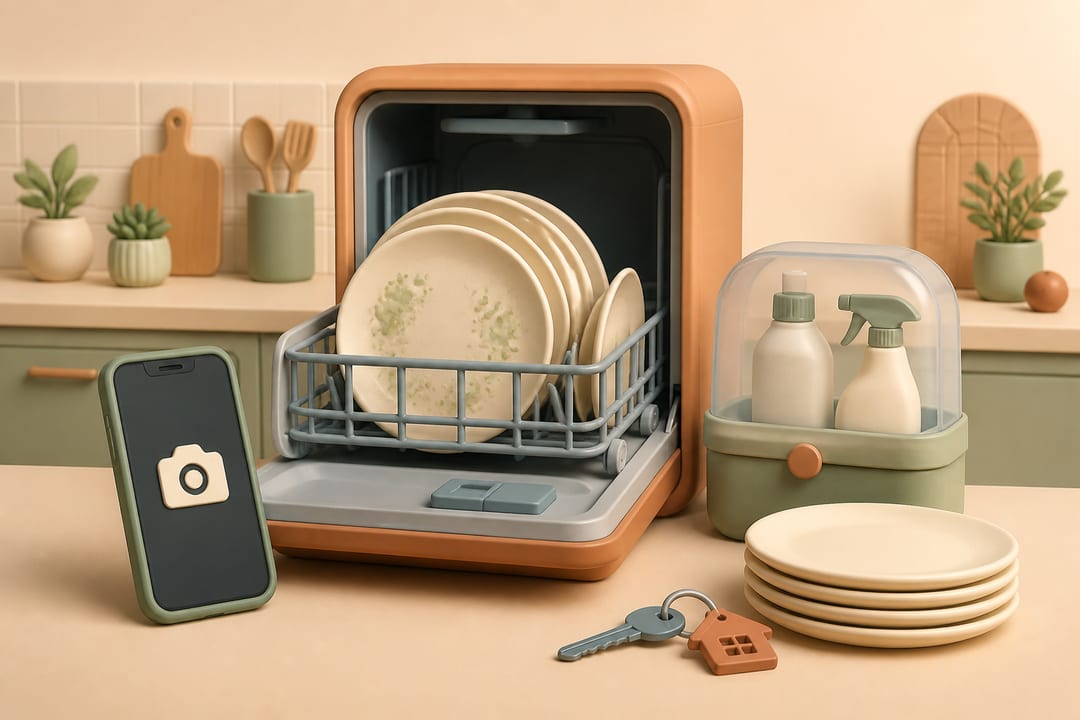
Imagine opening the dishwasher shortly after checking into a holiday rental and finding dishes from a previous stay still inside, with visible mould-like growth on them.
Three immediate reactions are common:
- run the machine several times on its hottest setting;
- add vinegar, bicarbonate or another cleaner; or
- demand a fixed percentage refund before establishing the impact.
None is a reliable first move.
Cleaning first can destroy the best evidence of the arrival condition. Adding products to an unfamiliar machine can damage it, react with residue already inside or expose the guest to fumes. A percentage pulled from the air does not explain what service was lost or why that amount is reasonable.
The better sequence is safety, evidence, notice, remedy and escalation.
What to Do in the First 30 Minutes
1. Stop using the affected items
Do not eat from the dishes or place additional utensils in the machine. Keep children and pets away from the open appliance. If there is a strong chemical smell, visible fumes, breathing difficulty or another immediate hazard, move to fresh air without putting yourself at risk.
Call 000 if someone has collapsed, is not breathing or has a life-threatening reaction. Australia's Poisons Information Centre is available 24 hours a day on 13 11 26 for poisoning advice. Australian Government: Poisons Information Centre
2. Photograph the condition before changing it
Create a small evidence sequence:
- the dishwasher closed, showing where it is in the kitchen;
- the door first opened, with the racks and dishes in their original position;
- wide views of the full interior;
- close-ups of visible residue or growth;
- the filter, drain or seals only if visible without dismantling anything;
- nearby clean-dish storage and other kitchen surfaces; and
- a short continuous video connecting the appliance to the accommodation.
Do not remove filters, disassemble hoses or stage the dishes. The evidence should show the condition as found, not an investigation performed by the guest.
3. Preserve the booking evidence
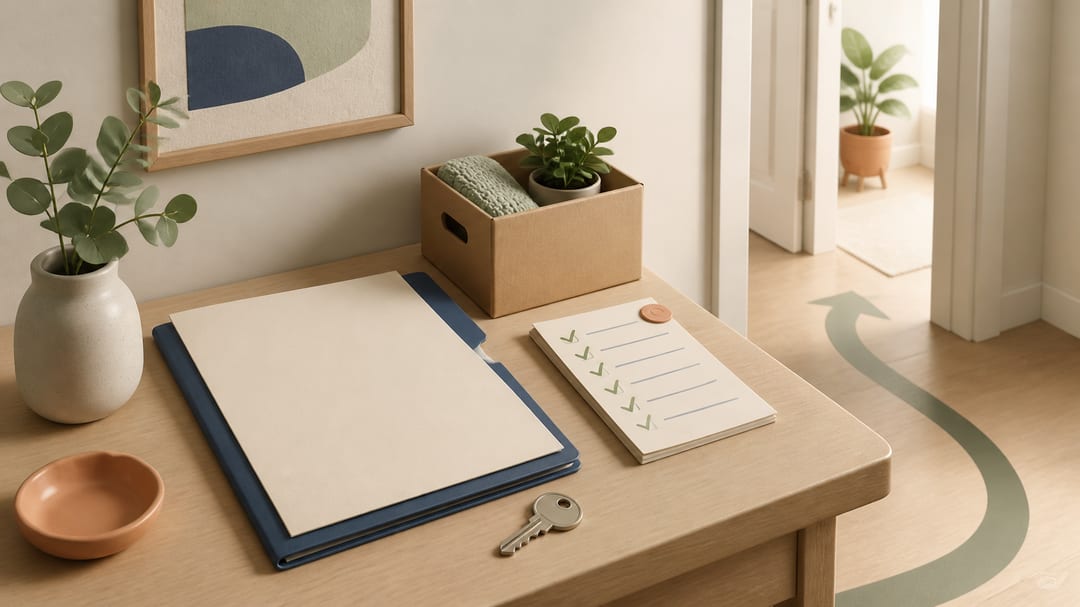
Save screenshots or PDFs of:
- the listing and kitchen photographs;
- whether a dishwasher or usable kitchen was advertised;
- the total booking price and any cleaning fee;
- check-in instructions and arrival time;
- the cancellation terms; and
- the booking platform's current issue-reporting policy.
A cleaning fee may make the failure more frustrating, but it does not automatically determine the refund. The useful question is what part of the promised accommodation was unavailable, for how long and with what practical consequence.
4. Notify the host in writing
Keep the first message factual and specific:
We checked in at approximately [time]. When we first opened the dishwasher, it contained dishes left from a previous stay with visible mould-like growth and residue. We have not used or cleaned the machine. Photos and video are attached. Please confirm by [reasonable time] whether you will arrange professional cleaning or servicing, provide clean replacement dishes and an alternative kitchen arrangement, or relocate us. We will keep the affected items untouched until you respond unless a safety issue requires otherwise.
Use the booking channel where possible. A phone call may solve an urgent problem, but follow it with a written summary: who called, what was agreed and by when.
5. Report within the platform deadline
If the stay was booked through Airbnb, its current Rebooking and Refund Policy for Homes treats accommodation that is not reasonably clean and sanitary as a potential Reservation Issue. The booking guest generally must notify the host or Airbnb within 72 hours after discovering the problem, provide relevant evidence and, when feasible, try to resolve it with the host first. Airbnb Rebooking and Refund Policy for Homes · Airbnb: What to Do If the Place Is Not Clean at Check-In
Report immediately rather than treating 72 hours as a target. A later money-request window does not extend the policy's issue-reporting deadline. Airbnb says certain refund requests can generally be made up to 60 days after checkout, but that is a different process and time limit. Airbnb: Request a Partial or Full Refund
For another platform or a direct booking, read that contract's current notice, evidence and escalation rules. Do not assume Airbnb's deadline applies elsewhere.
Do Not Become the Appliance Technician
“Just run it three times” sounds practical. It leaves several unanswered questions:
- Why did the previous cycle fail to drain or clean?
- Is the filter blocked?
- Is there old detergent or another chemical in the machine?
- Does the model permit the proposed product?
- Are the dishes dishwasher-safe?
- Has contamination reached seals, spray arms or the drain line?
The Victorian Department of Health distinguishes cleaning from sanitising: sanitiser does not work properly on a dirty surface. Its food-business guidance says dishwashers should expose all surfaces and use an appropriate hot cycle, dirty dishes should be rewashed, and the machine itself should be cleaned and serviced regularly. It also says vinegar and lemon juice are not effective sanitisers. Victorian Department of Health: Cleaning and Sanitising
That document is written for food businesses; it is a conservative hygiene reference, not an automatic legal cleaning standard for a holiday home. It does, however, show why one improvised ingredient is not a complete response to dirt, sanitation and an appliance fault.
Victoria's public-health guidance warns never to mix bleach with ammonia, acids or other cleaners because dangerous gases may be released. Vinegar is acidic and should not be combined with bleach or with an unknown product that may contain bleach. Follow the appliance manual and every product label. Better Health Channel: Mould Removal at Home
No universal official rule supports adding vinegar, then bicarbonate, then running multiple cycles in an unfamiliar rental dishwasher. Ask the host to arrange cleaning or servicing in accordance with the manufacturer's instructions. If you agree to perform a limited step yourself, obtain written instructions and agreement about any reasonable cost first—and do not accept work beyond your competence or comfort.
Match the Requested Remedy to the Actual Loss
Mould-like growth on dishes is a serious cleanliness failure. It is not automatically proof that the entire accommodation is unusable or that one fixed refund percentage is due.
Use a remedy ladder.
| Actual impact | A proportionate first request | Evidence that supports it |
|---|---|---|
| A few affected dishes; host replaces them and safely resolves the machine promptly | Cleaning or replacement, plus reimbursement of a small documented out-of-pocket cost if one was necessary | Arrival photos, host response time, receipt |
| Dishwasher unusable for part of the stay but sink and clean kitchenware remain safely available | Prompt service, clean replacements and a partial refund reflecting the lost amenity and duration | Listing amenity, repair timeline, affected days |
| Kitchen cannot be used safely and the guest must buy meals temporarily | Urgent remediation plus reasonable documented meal costs or an agreed price reduction | Kitchen photos, host messages, itemised receipts |
| Condition is extensive, creates a material health or safety concern, or cannot be fixed within a reasonable time | Rebooking assistance, cancellation or a stronger refund request | Full-property evidence, medical vulnerability if relevant, host refusal or failed remediation, departure record |
| Guest leaves immediately because the accommodation is materially unusable | Prompt platform escalation and a request tied to unused nights and lost value | Checkout/departure time, alternative accommodation receipt, evidence of severity |
Do not inflate the claim with unrelated complaints. Do not claim laboratory-confirmed mould from a photograph. Explain the functional loss:
- which appliance or kitchen area could not be used;
- when the problem was reported;
- how long the host took to respond;
- what proposed fix was offered;
- why that fix was insufficient, if it was; and
- which costs were reasonably incurred as a result.
A refund is not automatically 50%
Airbnb says the outcome can be a full or partial refund or rebooking help, depending on factors including severity, impact, the portion of the stay affected, whether the guest left, mitigating circumstances and the strength of the evidence. Its public policy does not assign a fixed refund percentage to mouldy dishes. Airbnb Rebooking and Refund Policy for Homes
A full refund is a stronger fit when a severe issue prevents use of the accommodation and the guest leaves, while a limited problem that is promptly fixed may support a smaller remedy. This is an evidence and lost-value analysis, not a punishment calculation.
Australian Consumer Law May Add a Separate Route
Consumer Affairs Victoria says holiday accommodation—including hotels, motels, short-stay accommodation and bed-and-breakfasts—does not count as ordinary rental accommodation. It is a service under a contract and comes under the Australian Consumer Law. That is why this guide refers to the host, supplier or accommodation provider, rather than assuming an ordinary residential landlord–tenant repair process. Consumer Affairs Victoria: Holiday Accommodation
The Australian Consumer Law provides guarantees for services supplied in trade or commerce. Services must be provided with due care and skill and be fit for an agreed or disclosed purpose. The remedy depends in part on whether the failure is major and whether it can be fixed within a reasonable time. ACCC: Consumer Rights and Guarantees
Consumer Affairs Victoria's tourism-business guidance explains that a consumer may be able to cancel for a major failure or one that cannot be fixed easily within a reasonable time. If the consumer keeps the service, an appropriate price reduction may reflect the reduction in value. For a non-major service problem, the supplier generally receives a reasonable opportunity to fix it. Consumer Affairs Victoria: Guidance for Tourism Businesses · Consumer Affairs Victoria: Services Not Fit for a Particular Purpose
One dirty dishwasher is not automatically a major failure. Prompt replacement of the dishes and professional remediation may make it a fixable problem. The argument for cancellation becomes stronger if the condition is extensive, the usable kitchen was central to the booking, the accommodation is materially unsafe or the supplier does not provide a timely solution.
The legal supplier also matters. A professional host, property manager and booking platform can be different entities with different contracts and obligations. If a host is genuinely acting privately rather than in business, some consumer guarantees may not apply to the host in the same way. Do not name a respondent until the booking receipt, terms and business identity have been checked. ACCC: Selling Online and the Sharing Economy
A Practical Escalation Path in Victoria
1. Complete the host and platform process
Send the evidence packet, requested remedy and response deadline. Preserve every reply and platform case number. If the host offers a fix, record when the cleaner or technician attends and photograph the result before using the machine.
2. Send a concise formal complaint
If the first exchange fails, write one document containing:
- booking and supplier details;
- a dated timeline;
- the condition discovered;
- the promised amenity or service;
- the remedy requested and why it matches the lost value;
- the response already received; and
- the date by which you request a written answer.
3. Ask Consumer Affairs Victoria for assistance
Consumer Affairs Victoria directs consumers to complain to the business first and keep records. Its dispute service is voluntary: it may contact the business and explore a resolution, but it cannot compel participation or impose an outcome. Consumer Affairs Victoria: Resolve Your Problem · Consumer Affairs Victoria General Complaint Form
The ACCC accepts reports that help identify widespread or systemic harm, but it does not resolve an individual's refund dispute. ACCC: Contacting a Business to Fix a Problem
4. Consider VCAT only after identifying the claim and respondent
VCAT's goods-and-services jurisdiction can include consumer–trader disputes. Filing is not simply “suing the listing.” The applicant must identify the correct legal respondent, legal basis, amount and evidence. Jurisdiction over a private host or an overseas platform entity should not be assumed. Review the current process and obtain advice when necessary. myVCAT · VCAT Consumer and Business Disputes Practice Note
5. Use the City of Ballarat channel carefully
City of Ballarat Environmental Health accepts enquiries or complaints about conditions at food, health and accommodation premises. A guest can ask whether the premises and condition fall within Council's jurisdiction. City of Ballarat: Environmental Health
Do not assume every entire-home holiday rental is registered “prescribed accommodation.” Victoria's current regulations exclude, among other things, a house or self-contained apartment under the occupier's exclusive occupation. Council involvement may therefore be unavailable for a typical entire-home stay, and it does not replace the host, platform or consumer-remedy process. Public Health and Wellbeing (Prescribed Accommodation) Regulations 2020
Health Concerns Need Their Own Lane
Visible growth does not establish species, concentration or medical causation. Describe what you observed without diagnosing it.
Victoria's Better Health Channel says mould can cause congestion, sneezing, coughing and wheezing and can worsen asthma or allergies. People with weakened immune systems, severe asthma or chronic lung disease may be more susceptible. Seek medical advice if symptoms or vulnerability make the exposure concerning. Better Health Channel: Mould and Your Health
Keep the health file separate from the refund file:
- note symptoms and timing;
- preserve medical advice and receipts;
- do not claim the accommodation caused a condition unless a qualified professional supports that conclusion; and
- use emergency or poison services for urgent risk rather than waiting for a host reply.
What a Responsible Host Response Looks Like
A good response does more than apologise:
- acknowledge the report and tell the guest not to use the affected items;
- preserve the guest's photographs and open an incident timeline;
- arrange a trained cleaner or appliance technician promptly;
- provide sealed or verified clean replacement dishes and a safe alternative where possible;
- inspect the filter, drainage and turnover checklist rather than merely rerun a cycle;
- document completion and ask the guest to confirm whether the amenity is usable;
- offer a remedy based on lost use, delay and reasonable expenses; and
- investigate how the turnover inspection failed before the next arrival.
The previous guest may have left dirty dishes, but the accommodation provider controls whether the property is inspected and made guest-ready before the next check-in. Blame does not restore the current stay.
Where Pine Fits
A cleanliness dispute can generate photographs, platform messages, phone calls, receipts, policy deadlines and competing explanations in a few hours.
Open Pine to organize the listing, arrival evidence, messages, expenses and response deadlines into one timeline, separate the health, platform and consumer-remedy questions, and prepare a focused complaint for review. Pine does not inspect the accommodation, identify mould, give medical or legal advice, contact the host for you or guarantee a refund.
Frequently Asked Questions
Should I run a dirty rental dishwasher several times before reporting it?
No. Photograph the untouched condition and report it first. The host should determine whether the appliance needs cleaning, an approved cycle, filter work or professional servicing. Multiple cycles may not correct a blocked or contaminated machine and can destroy evidence.
Can I add vinegar and bicarbonate to the dishwasher?
Do not improvise with chemicals in an unfamiliar machine. Vinegar is not an effective sanitiser under the cited Victorian food-safety guidance, and no universal official instruction supports a vinegar-then-bicarbonate routine. Never mix vinegar or another acid with bleach, and follow the appliance manual and product labels.
Am I automatically entitled to a 50% refund?
No. A remedy should reflect severity, duration, lost use, whether the issue was fixed and whether the guest stayed or left. Platform rules and Australian Consumer Law do not assign a universal 50% refund to this fact pattern.
Does Airbnb require me to report the issue within 24 hours?
Its current Rebooking and Refund Policy for Homes generally uses 72 hours after discovery, not 24 hours. Report immediately, attach evidence and contact the host when feasible. Do not confuse this with the longer Resolution Center window for submitting certain money requests.
Can I cancel the entire stay because of mouldy dishes?
Possibly, but not automatically. A prompt, effective fix may make the issue non-major. Cancellation becomes more supportable when the problem is extensive, materially unsafe, central to the booked purpose or not fixed within a reasonable time. The platform policy, contract, supplier status and evidence all matter.
Should I complain to Ballarat City Council?
You can ask Environmental Health whether the premises and condition fall within Council's authority. A typical exclusively occupied house or self-contained apartment may be excluded from Victoria's prescribed-accommodation regime, so Council may not be the correct refund or enforcement channel.
What if cleaning fumes make me feel unwell?
Move to fresh air without putting yourself at risk. Call 000 for collapse, breathing failure or another emergency. Otherwise call the Australian Poisons Information Centre on 13 11 26 for poisoning advice and seek appropriate medical care.
Official Sources
- Airbnb Rebooking and Refund Policy for Homes
- Airbnb: What to Do If the Place Is Not Clean at Check-In
- Airbnb: Request a Partial or Full Refund
- ACCC: Consumer Rights and Guarantees
- Consumer Affairs Victoria: Holiday Accommodation
- Consumer Affairs Victoria: Guidance for Tourism Businesses
- Consumer Affairs Victoria: Resolve Your Problem
- Victorian Department of Health: Cleaning and Sanitising
- Better Health Channel: Mould and Your Health
- Better Health Channel: Mould Removal at Home
- Australian Government: Poisons Information Centre
- City of Ballarat: Environmental Health
This article provides general information only and is not legal, medical, public-health, appliance-repair or financial advice. Consumer remedies, platform outcomes and government jurisdiction depend on the contract, supplier status, evidence, severity, response and current law. For urgent health or chemical exposure concerns, use appropriate emergency, poison or medical services.