When a partner says you must leave tomorrow, the first problem is not proving who is morally right. It is keeping yourself safe, protecting your documents and belongings, finding somewhere to sleep, and then figuring out what legal status you actually have.
Quick answer: In Ontario, a person who lives with a boyfriend or roommate who is the only named tenant may be an occupant or roommate rather than a tenant under the Residential Tenancies Act (RTA). That can mean the person cannot use the Landlord and Tenant Board (LTB) in the same way as a named tenant. But the result depends on the agreement, who accepted rent, who controls the home, whether there was a subtenancy, whether the primary tenant remains in the unit and other facts. A 12-hour demand is not automatically a valid legal deadline, and “30 days” is not automatically guaranteed to every roommate. Treat the immediate situation as a safety and housing emergency, preserve evidence, get Ontario-specific advice and make a backup plan now.
This guide is written for a general Ontario scenario involving a partner or primary leaseholder. It is not legal advice, and it does not decide whether a particular person is a tenant, occupant, subtenant or guest. If there is immediate danger, call 911. If you may lose your housing tonight, contact 211 Ontario and your school’s emergency or international-student support team.
Step 1: Check Whether You Are Safe Tonight
A housing dispute can become unsafe when one person controls the keys, money, immigration documents, transportation or access to the home. You do not have to wait for physical violence before taking a safety concern seriously.
If you are worried about threats, intimidation, stalking, physical harm, property destruction or being trapped in the home:
- leave for a safer place if you can do so safely;
- call 911 in an emergency;
- contact 211 Ontario for local shelter, housing and community referrals;
- tell one trusted person what is happening and where you may stay;
- avoid announcing a detailed safety plan if doing so could increase the risk; and
- ask a shelter or crisis worker about safe ways to collect belongings later.
The Government of Canada’s newcomer housing guidance says emergency shelters can help people who are without a place to sleep or at risk of abuse, and that shelter staff can connect people with support, legal information, financial help and housing referrals. It also says that people can call 211 for community and government services.
If the threat is not violent but you may be locked out, focus on a practical overnight plan first. A friend, campus residence, hostel, extended-stay hotel, shelter or short-term room can be a bridge while you clarify your rights. You can work on the legal and financial dispute after you are somewhere safe.
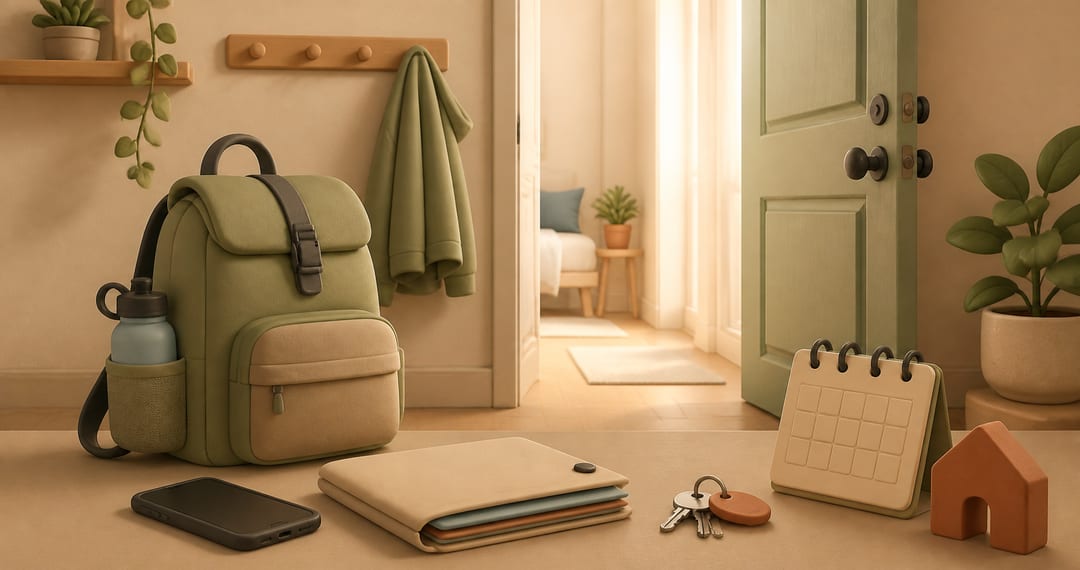
Build a Small “Leave Now” Bag
Keep these items together, or store copies securely outside the home:
- passport, study permit, provincial ID and immigration documents;
- phone, charger, bank cards and a small amount of cash;
- medication, prescriptions, glasses and essential health information;
- school ID, enrollment information and emergency contacts;
- keys, important mail and any work documents;
- a few days of clothing and basic toiletries; and
- screenshots or copies of the housing agreement and payment history.
Do not surrender your passport or study documents to a partner or roommate. If someone controls your accounts or phone plan, change passwords from a safe device and enable two-factor authentication where possible.
Step 2: Identify Your Housing Relationship
The most important legal question is not simply “Am I paying $10?” It is: what agreement gave me the right to live there, and with whom did I make it?
You may be a named tenant
You may have a stronger RTA position if:
- your name is on the lease with the property owner or landlord;
- the landlord gave you a tenancy agreement or rent receipts in your name;
- you rented a separate room or unit directly from the landlord under a tenancy agreement; or
- the facts show a direct landlord-tenant relationship rather than merely living in a partner’s home.
Being named on the lease is important, but the full facts still matter. Check the document, the payment trail and the messages about who agreed to your occupancy.
You may be an occupant or roommate
The LTB’s Interpretation Guideline 21 explains that an occupant or roommate may live in a rental unit as their principal residence without being a tenant. It says an occupant generally lives there with the tenant’s consent and has no contractual relationship with the landlord. Paying a fee to the tenant does not automatically turn the occupant into a tenant, and even paying part of the rent directly to the landlord does not automatically decide the issue.
This is often the difficult category in a relationship breakdown. If the boyfriend is the only person on the lease and continues to live in the unit, the partner living there may be treated as his roommate or occupant for RTA purposes. That can mean the person cannot file an LTB application against the boyfriend as though they were a tenant. The LTB guideline says rights that exist outside the RTA must be pursued in court.
You may be a subtenant—but do not assume it
An Ontario subtenancy has specific features. The original tenant generally vacates the unit, gives another person the right to occupy it for a term ending before the original tenancy, keeps a right to return and obtains the landlord’s consent. If the original tenant continues living in the unit with the other person, the arrangement is usually analyzed as a roommate or occupant situation rather than an RTA sublet.
The label “sublet” in a text message is not enough. The written agreement, possession, landlord consent and actual living arrangement matter.
Sharing a kitchen is easy to misunderstand
Ontario’s RTA excludes living accommodation where the occupant must share a kitchen or bathroom with the owner or specified members of the owner’s family who live in the building. That is not the same as sharing a kitchen with a boyfriend who is merely the named tenant.
The exclusion may explain why a tenant who lives with the property owner has a different legal position. It does not, by itself, answer the status of a person sharing a kitchen with a primary tenant. Do not treat “we share a kitchen” as a complete legal analysis.
What the LTB Can—and Cannot—Decide
The LTB governs disputes between landlords and tenants under the RTA. Its own application guidance says roommates or other occupants who are guests of the tenant do not have rights or protections under the RTA and cannot apply to the LTB. It also says the tenant cannot be evicted simply for having a roommate, although the landlord may take action if the roommate causes problems such as serious noise, damage or overcrowding.
This produces two different questions:
- What can the property landlord do about the named tenant and the unit? The landlord may have an RTA process if there is a tenancy problem.
- What can the primary tenant do to the roommate or partner? That may be governed by the agreement and ordinary court remedies rather than an LTB eviction application.
Do not assume that the property landlord’s rights and the roommate’s rights are mirror images. They are not necessarily the same relationship.
The LTB’s official guidance also says that when a tenant leaves or the tenancy ends, a roommate or occupant generally must leave with the tenant. If an unauthorized occupant remains after the tenant leaves, the landlord may apply to the LTB under the RTA’s unauthorized-occupant provisions. That is another reason not to rely on a comment that says “the landlord cannot do anything” without examining who is on the lease and who remains in possession.
Is a 12-Hour Move-Out Deadline Automatically Valid?
There is no single answer for every Ontario roommate arrangement.
If you are a tenant covered by the RTA, the landlord generally has to use the RTA’s notice and LTB process. A landlord’s notice is not the same as an eviction order, and a lockout can raise serious issues.
If you are an occupant or roommate of the primary tenant, the LTB’s rules may not apply to your relationship with that tenant. Your rights may instead come from a written roommate agreement, an oral agreement, contract law or other legal principles. A court might consider the agreed payment, the length of the arrangement, the purpose of the payment, the notice that was reasonable in the circumstances and any losses caused by an abrupt termination.
That does not mean you should confidently tell the other person you have 30 days, or that you should refuse to leave and wait for a physical confrontation. “Thirty days” can be a useful negotiation proposal in some monthly arrangements, but it is not a universal answer for every occupant. Ask a community legal clinic or lawyer to assess the facts.
What to Preserve Before Anything Changes
Create a dated folder containing:
| Evidence | Why it matters |
|---|---|
| Lease and any roommate agreement | Shows who promised the right to occupy the space. |
| E-transfers, receipts or bank records | Shows what was paid, to whom, how often and for what purpose. |
| Messages about rent, move-in and move-out | May show consent, notice terms and the parties’ understanding. |
| Mail, school records and deliveries | Can help show that the unit was your principal residence. |
| Photos of your room and belongings | Documents possession and condition before a dispute escalates. |
| Threats, lockout messages or damage | Creates a timeline for legal advice and safety planning. |
| Landlord or property-manager communications | Helps determine whether the owner knew about or accepted the arrangement. |
| Receipts for hotel, transport, storage or replacement housing | Documents financial losses that a lawyer may need to assess. |
Keep the originals. Export important messages if possible, but do not put yourself at risk by secretly searching through someone else’s accounts or devices. Store copies in a secure cloud account or with a trusted person.
A Calm Message That Buys Time
If communication is safe, keep it short and in writing. For example:
“I understand that you want me to move out. I am making arrangements now. Please confirm the date you are asking for, whether I will have continued access to my room and belongings while I arrange a move, and whether we can agree in writing on a safe move-out date. I will keep communication about the housing arrangements in writing.”
This message does not concede that you are an unauthorized guest, promise a legal deadline or threaten retaliation. It creates a record and invites a practical agreement.
Do not negotiate alone in person if you feel unsafe. If belongings must be collected, ask a trusted person to accompany you where safe, arrange a neutral handoff or get advice from a local support service.
Emergency Housing for an International Student
An international student should contact several support channels at once:
- University or college: international student services, student housing, financial aid, student union, counselling or the campus emergency contact. Ontario’s official international-student information notes that some colleges and universities offer one-time emergency loans, but availability depends on the institution.
- 211 Ontario: its helpline is available across Ontario by phone, text, online chat and email, with 24/7 phone and text support and service in many languages. Ask specifically about emergency shelter, homelessness prevention, newcomer services and legal clinics.
- Local municipal housing services: if you are in Ottawa, the City says people who need shelter can call 3-1-1 for placement assistance. Other municipalities use different numbers and eligibility rules.
- Trusted people: ask for a short, specific arrangement such as one night, a place to store documents, a ride to campus or help viewing rooms.
- Temporary accommodation: compare a hostel, extended-stay property, campus room, short-term room or shelter. A safe bridge is valuable even if it is not the final housing solution.
Emergency resources may not pay for every hotel or guarantee a long-term placement. Call early, explain the deadline and ask what documentation is required.
If You Are Locked Out or Your Belongings Are Withheld
Do not force entry, damage the property or escalate a confrontation. If there is an immediate safety threat, call 911. If the dispute is about access to belongings and not an emergency, contact a local legal clinic, 211 or the relevant non-emergency service for guidance before taking action.
Document the time, the condition of the door, the messages you received and the property you cannot access. Ask for a written arrangement to collect your belongings. If necessary, make a list of essential items first: passport, medication, ID, school records, electronics, work materials and irreplaceable documents.
The correct remedy may depend on whether you are a tenant, occupant, subtenant or guest. A public argument about “illegal eviction” will not substitute for identifying the legal relationship.
Common Mistakes to Avoid
- Assuming that paying a small amount automatically makes you a tenant.
- Assuming that not being on the lease means you have no rights at all.
- Treating a 12-hour demand or a 30-day demand as universally valid without checking the agreement and status.
- Calling the property landlord and making accusations before preserving evidence.
- Leaving passports, medication or study documents behind.
- Relying on verbal promises about a later move-out date.
- Staying in a dangerous room to protect a possible legal claim.
- Taking legal advice from a commenter who has not seen the agreement or knows the jurisdiction.
A Better Decision Tree
Use this order:
- Safety: Is there a risk of violence, coercion, stalking, lockout or property destruction?
- Tonight: Where can you sleep, and how will you carry your essential documents and medication?
- Status: Are you a named tenant, direct tenant, subtenant, occupant, roommate or guest?
- Evidence: What agreement, payments, messages and residence records support that status?
- Notice: What move-out date is being demanded, and what date can you realistically meet?
- Advice: Which Ontario legal clinic, LTB information service, university support office or lawyer can assess the facts?
- Transition: How will you move belongings, end payments, update your address and secure a new room or lease?
This order prevents a common failure mode: spending the only available time arguing about a legal label while having no safe place to sleep.
Where Pine Fits
Open Pine to organize the lease, roommate agreement, payment records, messages, photos, emergency contacts and housing-search notes into a dated timeline. Pine can help prepare a concise summary for a legal clinic, university support office or housing adviser and separate confirmed documents from assumptions. It does not decide tenant status, replace legal advice, contact emergency services or guarantee a housing outcome.
Frequently Asked Questions
Can my boyfriend legally kick me out tomorrow in Ontario?
It depends on your legal relationship and the facts. A named tenant, direct tenant, subtenant, occupant and guest can have different rights. A 12-hour demand is not automatically the correct legal process, but a person who is only an occupant may not have the same LTB protections as a tenant. Get Ontario-specific advice quickly and make a safe backup plan.
Does paying rent prove that I am a tenant?
No. The LTB says that an occupant may pay a fee to the tenant and still not have a contractual relationship with the property landlord. Payment records are important evidence, but the recipient, agreement, possession and surrounding facts matter.
Does sharing a kitchen remove all Ontario tenant protection?
Not automatically. The RTA exclusion refers to sharing a kitchen or bathroom with the owner or specified family members who live in the building. Sharing with a boyfriend who is merely the primary tenant is a different fact pattern. Your status still needs to be assessed.
Do I automatically get 30 days’ notice as a roommate?
Not necessarily. A 30-day period may be a reasonable proposal in some monthly arrangements, but it is not a universal rule for every roommate or occupant. Check any agreement and obtain advice about contract and common-law rights.
Can I apply to the LTB if I am not on the lease?
Being off the lease does not answer the question by itself. However, the LTB says roommates or occupants who are guests of a tenant generally do not have RTA rights or the ability to apply to the LTB as tenants. A legal clinic can help assess whether the facts point to a tenancy, subtenancy or occupancy arrangement.
What if my boyfriend changes the locks?
Do not force entry or confront him if that could put you at risk. Call 911 for an emergency; otherwise document what happened, contact 211 or a legal clinic, and arrange a safe way to retrieve essential belongings.
Can international students get emergency housing help?
Possibly. Contact your school’s international-student and housing offices, 211 Ontario and local shelter or homelessness-prevention services. The support available, eligibility and funding vary. Explain that you may lose housing immediately and ask about emergency accommodation, loans, legal referrals and room-finding support.
Official Sources
- Landlord and Tenant Board: Landlords, Tenants, Occupants and Residential Tenancies, Interpretation Guideline 21
- Landlord and Tenant Board: Application and hearing process
- Landlord and Tenant Board: A Guide to the Residential Tenancies Act
- Landlord and Tenant Board: If You Are Locked out of Your Unit
- Ontario Residential Tenancies Act, 2006, section 5
- Landlord and Tenant Board: How a landlord can end a tenancy
- Ontario: Renting in Ontario—your rights
- 211 Ontario: Help Starts Here
- Government of Canada: Newcomers and other forms of housing
- Ontario: Study in Ontario—international students
- City of Ottawa: Homelessness help
This article provides general information, not legal, immigration, financial or safety advice. Ontario housing rights depend on the agreement, property, parties, possession and facts. Rules and services can change. If there is immediate danger, call 911; for housing support, contact 211 Ontario or a local service provider; for a disputed move-out or lockout, obtain advice from an Ontario legal clinic or qualified lawyer.