


By the Pine AI Editorial Team | Updated May 2026 | Reviewed using publicly available legal resources
San Francisco's street grid is a patchwork of overlapping restrictions — tow-away zones active for a two-hour morning window, Muni bus zones with non-obvious boundaries, street cleaning schedules that differ on each side of the same block. SFMTA enforces all of it, and the citations add up fast.
Before you pay, check the ticket. The restriction may not have been clearly posted. The sign may have been blocked. The citation may have a wrong plate number. Under California Vehicle Code Section 40215, every driver has the right to an initial administrative review and, if denied, a formal administrative hearing. The process is manageable when you know what to submit.
You have 21 days from the citation date to act.
Pine AI files your SF dispute automatically.
Common Reasons SF Parking Tickets Get Dismissed
Obscured or blocked signage San Francisco's tow-away zones often have multiple signs stacked at one post — hours for street cleaning, hours for peak-period tow-away, Muni-related restrictions — all at a single location. A Pine user on Valencia Street received a $110 tow-away zone citation. The sign cluster at that post was partially obscured by a Muni bus stop shelter that had been recently installed, making the tow-away hours difficult to read from the parking approach direction. The user photographed the obstruction from the parking position. SFMTA's administrative review dismissed the citation.
Street cleaning signs with damaged or illegible panels Street cleaning citations are the highest-volume ticket type in SF residential neighborhoods. Signs with torn panels, faded text, or graffiti obscuring the schedule are a recognized dispute ground. The photo needs to show the specific condition from your parking position.
Officer error on the citation Plate number transpositions are the most common officer error. A wrong block address, wrong vehicle make, or wrong violation code are also grounds. Compare every field on the citation against your CA DMV registration.
Meter malfunction or SFpark failure SFpark pay stations accept credit cards and mobile payments. When a terminal fails — a "Card Read Error," an unresponsive touchscreen, a payment that processes locally but doesn't register — it's a disputable ground. Evidence is the key: a photo of the error message, a bank statement showing no charge, or a screenshot of a payment app failure.
Temporary restrictions not properly noticed Construction permits, special events, and filming require advance notice signs. If the temporary no-parking was posted with insufficient notice or the signs were removed before enforcement, the citation is disputable.
How to Dispute an SF Parking Ticket: Step by Step
Step 1 — Examine the citation at the location
Before driving away, check every field: plate number, vehicle color and make, street address, violation code, date and time. If anything is wrong, note it immediately and photograph the citation alongside evidence that contradicts it. This is your cleanest window for documentation.
Step 2 — Set your 21-day deadline [NEEDS_VERIFICATION]
Count 21 calendar days from the citation issue date. Set a phone reminder now. After this deadline, a penalty amount is added to the base fine and your right to an initial review is lost under California law.
Step 3 — Gather evidence
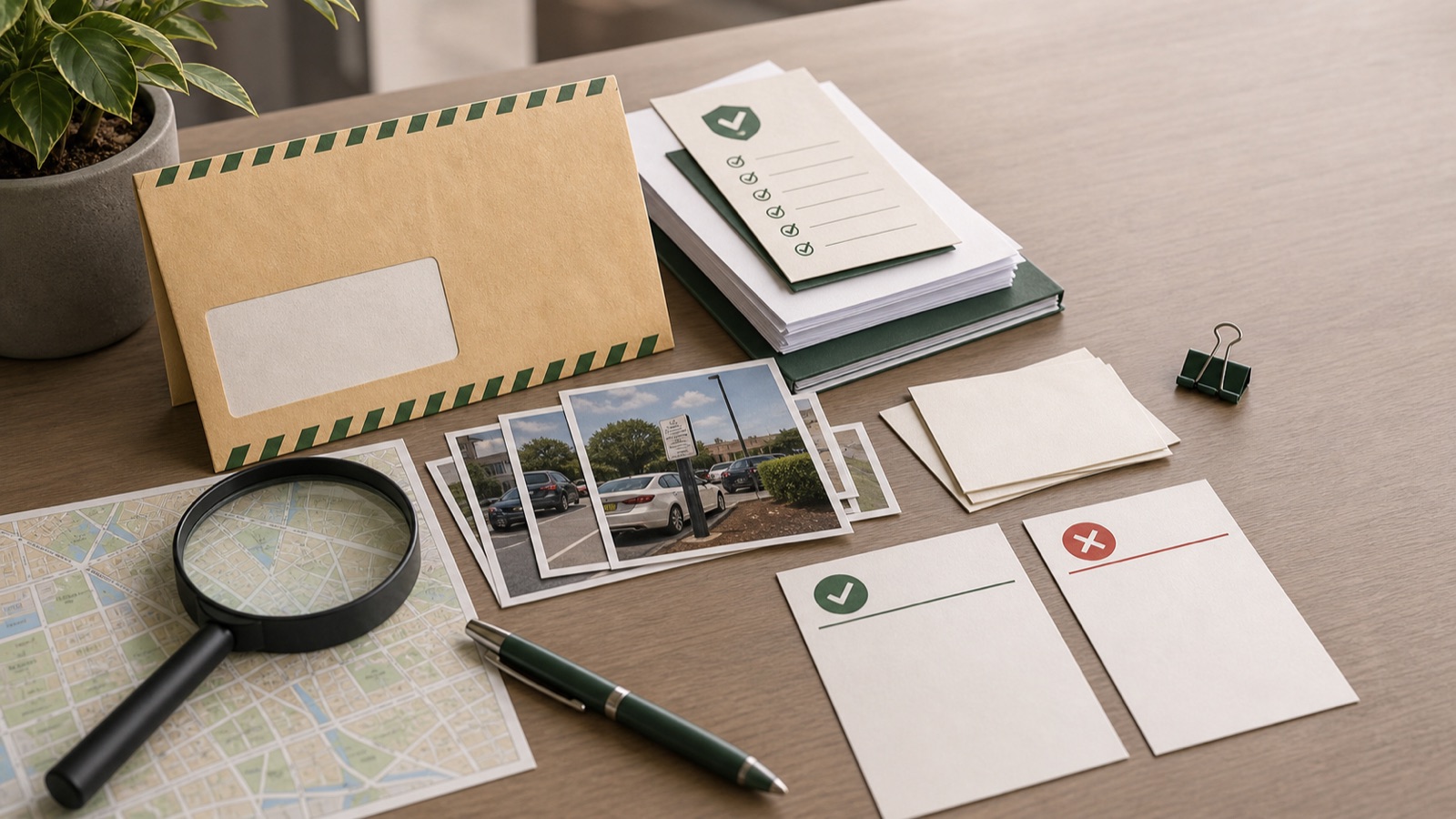
What makes a San Francisco dispute succeed is specific, visual evidence:
- Photo of the signs from your exact parking position — not from the sidewalk across the street, from where your driver's door was
- Photo showing any obstruction (vegetation, structures, other signage) blocking the restriction sign
- Screenshot of any meter or payment app error, with timestamp
- Bank statement showing no payment charge processed on that date
- CA DMV registration if the plate on the citation is wrong
Step 4 — File your initial administrative review with SFMTA
Go to sfmta.com — parking citations. You can request an initial review online or by mail. The online process requires your citation number and allows photo uploads.
This is the first stage under California CVC 40215. A reviewer examines the citation record and your written explanation. This is not a hearing — it's a document review. Under California law, SFMTA must complete this review and notify you within a specified period.
Keep your submission confirmation. SFMTA's portal does not always send confirmation emails.
Step 5 — If initial review is denied: request a formal administrative hearing
If SFMTA's reviewer upholds the citation, you have the right to request a formal administrative hearing. In San Francisco, this can be conducted:
- In person at an SFMTA hearing location
- By mail (written hearing request)
The hearing examiner has full authority to dismiss or reduce the citation. For cases with strong photographic evidence, in-person hearings produce better outcomes — the examiner can review your original photos and ask clarifying questions.
Step 6 — Superior Court appeal (if hearing denied)
If the administrative hearing upholds the citation and you believe the decision was in error, you have the right to appeal to San Francisco Superior Court. Filing fees apply. For standard parking violations this is rarely cost-effective, but for high-value citations with documented procedural errors it may be warranted.
What Evidence Actually Helps
Strongest:
- Timestamped photo from your exact parking position showing the sign — or showing an obstruction that blocked the sign
- Photo of a meter or pay station error message, taken at the time of the violation
- CA DMV vehicle registration showing a field that contradicts what's on the citation
- Bank or card statement showing no SFMTA payment charge processed on the citation date
Supporting:
- Wide-angle block photo showing the overall sign cluster and visibility context
- Screenshot of a payment app confirmation or error with timestamp
- City permit or event documentation showing a restriction shouldn't have applied
- Weather records if visibility was a factor
Weakest but still worth including:
- General area photos without the specific sign in frame
- Written descriptions without accompanying documentation
What Happens After You Submit
After filing your initial review with SFMTA:
-
No immediate confirmation — check your citation status at sfmta.com using your citation number. Save any confirmation number provided at submission.
-
Review period — California law requires SFMTA to complete the initial review and notify you.
-
Written decision — SFMTA mails a decision. If dismissed, no payment is required. If upheld, the decision letter includes instructions for requesting a formal hearing.
-
Hearing request deadline — If denied, you have a limited window to request a hearing. The denial notice will specify this deadline — do not miss it.
-
Hearing decision — Issued at the hearing for in-person cases, or mailed for written hearings.
-
Superior Court appeal — If the hearing is denied, you have a right to appeal to SF Superior Court within the window specified in the denial.
How Pine AI Handles SF Disputes
SFMTA's portal can be slow and its confirmation process is inconsistent. Pine reads your SF citation, identifies the violation code and applicable dispute grounds, writes a dispute letter formatted for SFMTA's initial review requirements, and files the complete package. If the initial review is denied and a hearing submission is needed, Pine prepares that as well.
Frequently Asked Questions
How long do I have to dispute an SF parking ticket? 21 calendar days from the citation date. After this deadline, a penalty is added and your initial review right is lost.
What is the CVC 40215 process? California Vehicle Code Section 40215 establishes a statewide framework: first, an initial administrative review; if denied, a formal administrative hearing; if denied, a Superior Court appeal. All California cities including San Francisco must follow this process.
Does disputing increase my fine? No. Under California law, filing a dispute cannot increase the original fine amount.
Can I dispute a tow-away zone ticket? Yes — particularly if the signage was obscured, improperly posted, or if the restriction didn't apply at the time. Tow-away zone citations are among the disputes Pine handles most frequently in San Francisco.
How long does an SFMTA dispute take? Initial review: California law sets a review period requirement. Formal hearings: scheduling varies.