I've lost track of how many times I've glanced at my bank statement between calls, seen a vague descriptor like Probiller, and immediately thought: "Not now." If you've landed here, you're likely in that exact situation—staring at a charge from probiller.com that you don't recognize and looking for the fastest way to cancel it. Hi, I'm Millie. As someone who manages triple-digit inboxes and endless project tabs, I don't have a spare hour for detective work every time a billing name looks unfamiliar. That's why I've done the heavy lifting for you. In this guide, I'll break down exactly what this processor is and provide a no-nonsense, practical path to stopping those recurring charges without turning it into a part-time job.
What is Probiller?
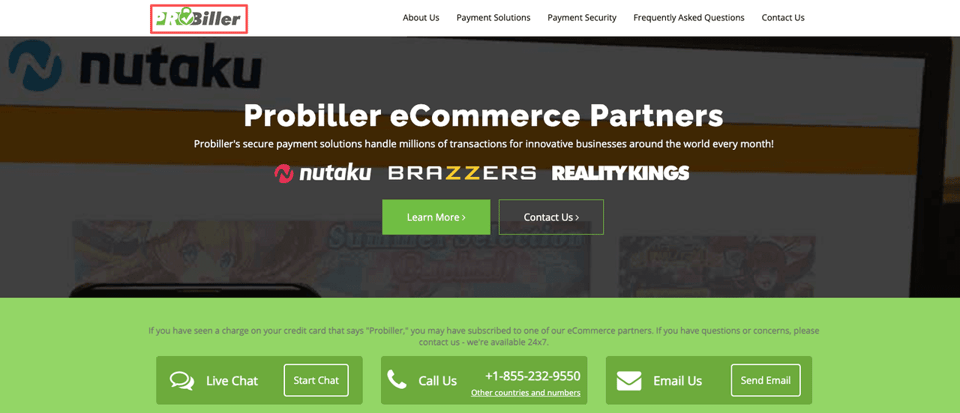
Probiller is a third-party payment processor. In plain English, that means it handles billing on behalf of other online services rather than being the service itself.
So if you're searching what is probiller or what is probiller.com, the short answer is this: it's a company that processes payments, subscriptions, and recurring charges for merchants. Instead of your statement showing the exact name of the site you used, it may show Probiller or a related descriptor.
That's why people sometimes assume it's fraudulent right away. The name on the statement doesn't match the name they remember clicking on. And honestly, that confusion is understandable.
A few important things to know:
- Probiller typically appears when a merchant uses it to collect payment.
- It may handle one-time purchases or recurring subscriptions.
- The billing descriptor on your card statement may be more recognizable to the processor than to the original website name. This is a common practice—payment processors like Stripe explain how statement descriptors work and why the name on your bill may differ from the brand you purchased from.
- Seeing Probiller on a statement does not automatically mean it's a scam.
That said, I'm careful with wording here. "Not automatically a scam" is not the same as "every charge is valid." A Probiller charge could still be unauthorized, forgotten, tied to a trial that rolled into a subscription, or attached to a service someone else used with your card.
I don't guess. I verify. If I saw this on my own statement, I'd treat it like any unfamiliar billing processor charge: first identify it, then decide whether it's legitimate, then cancel or dispute it if needed.
Why does Probiller appear on my bank statement?
Most often, Probiller appears on a bank statement because a website or subscription service you used outsourced its billing to Probiller.
That can happen for a few pretty ordinary reasons:
1. You subscribed to a service that uses Probiller for recurring billing. This is probably the most common explanation. You signed up somewhere, entered your card details, and the processor name, not the brand name you remember, showed up later.
2. A free or low-cost trial converted into a paid plan. This is where people get caught. The FTC has detailed guidance on free trials and auto-renewals — the initial sign-up felt minor, then a recurring charge appeared later under a processor name they didn't recognize.
3. You made a one-time purchase through a site using Probiller. Not every Probiller bank statement entry is a monthly subscription. Sometimes it's a single charge.
4. Someone else used your card. If you share a card with a partner, family member, or team expense setup, it may be legitimate but unfamiliar.
5. The charge is unauthorized. This is less pleasant, obviously, but it's still possible. If nothing in your records matches the date or amount, I'd stop treating it as a memory problem and start treating it as a billing problem.
I was half-expecting to repeat myself three times the first time I researched one of these vague processor charges. Instead, the pattern was surprisingly consistent: the statement descriptor was the issue, not the billing system itself.
If you're trying to figure out whether a Probiller charge is real, here's the quickest check I'd do before contacting anyone:
- Search your email for terms like Probiller, probiller.com, receipt, subscription, and the charge amount.
- Check old sign-up confirmations around the date the billing likely started.
- Review any digital services you tested and forgot to cancel.
- Ask anyone else who has access to the card.
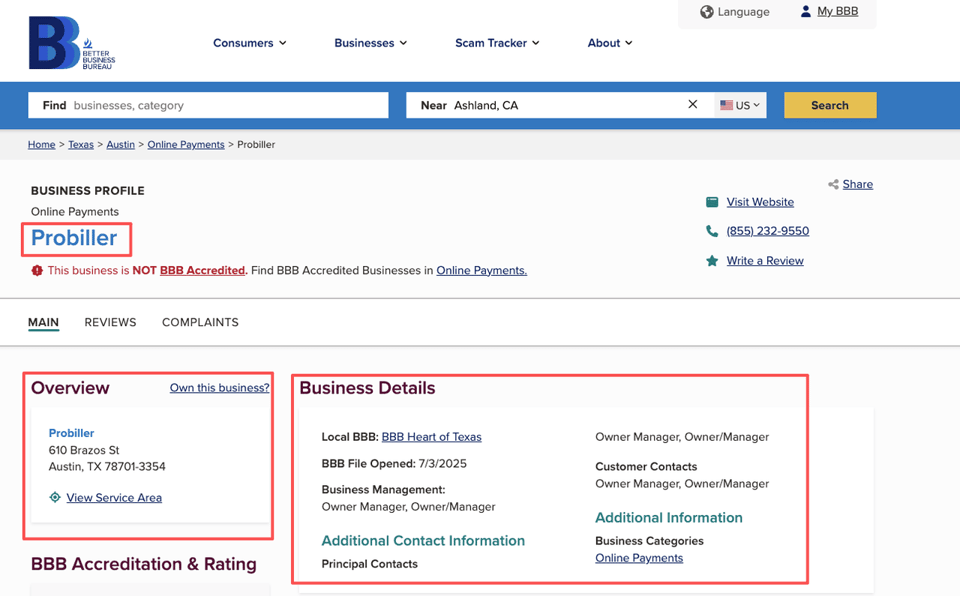
If none of that turns up anything useful, the charge deserves a closer look. That's usually the point where people start searching Probiller scam. The Better Business Bureau profile for Probiller can also help you cross-reference complaints and verify the company's legitimacy. Sometimes it is simply a forgotten subscription. Sometimes it isn't. The key is not to leave it sitting there for three billing cycles because dealing with it sounds annoying. I've done that before. It never gets less annoying.
Which services use Probiller billing?
Probiller is commonly used by online subscription-based services and merchants that want a third party to handle payment processing. The exact merchants can change over time, so I wouldn't rely on a random list floating around a forum from three years ago.
What matters more is the pattern.
Services that use Probiller billing often include:
- recurring membership websites
- digital content subscriptions
- entertainment or media platforms
- other online services that prefer outsourced billing and customer payment support
Because Probiller acts as the billing intermediary, the merchant's brand name may not be the first thing you see on your card statement. That's what creates the "I don't recognize this, but maybe I do?" problem.
Before I committed to any conclusion, I wanted to know the part that actually matters: can I identify the original merchant from the charge? In many cases, yes, either through the receipt email, your account history with the service, or Probiller's own support and transaction lookup tools if available.
Here's how I'd connect the dots:
Match the date and amount Look for any service you signed up for around the same time. Even a small mismatch in memory can throw you off. A service you think of as a weekend trial might now be a monthly renewal.
Check your browser and password manager history This worked better than it had any right to the last time I had to identify a weird subscription. Saved logins and browser history can reveal a site you completely forgot about.
Look for recurring patterns If the same amount appears monthly, it's likely a subscription. If it's a one-off, that usually points to a purchase rather than ongoing membership.
Contact billing support with the transaction details If you have the charge date, amount, and last four digits of the card, Probiller's customer support team can often identify which merchant used the processor.
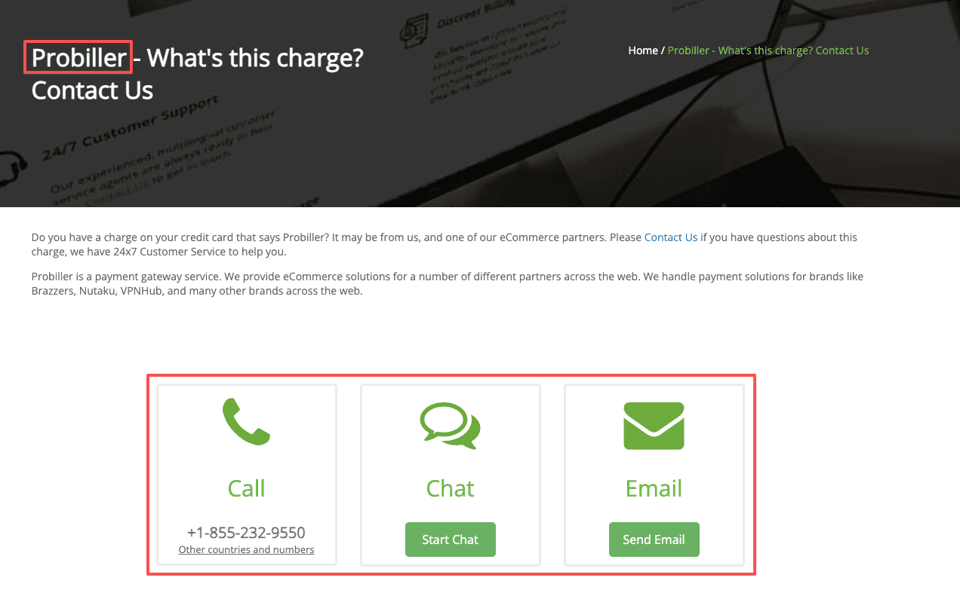
This is also where I'd be careful with the phrase Probiller scam. People use it because they're frustrated and the charge looks unfamiliar. User reviews on Trustpilot for Probiller show a mixed picture—sometimes that suspicion is justified, but often the real issue is poor descriptor clarity, automatic renewal, or a sign-up flow the user forgot about. Those aren't the same thing, even if they feel equally irritating when you're staring at your statement before a video call.

How to cancel a Probiller charge (step-by-step)
If I wanted to stop a Probiller charge fast, I'd keep it very procedural. No wandering around tabs. No reading ten policy pages unless I had to.
1. Confirm whether the charge is tied to a real subscription Start with your receipt emails, account history, and any service that might have used Probiller as its billing processor. If you can identify the original merchant, cancellation is usually easier.
2. Log in to the merchant account, if you still have access Many subscriptions can be canceled directly from the service you signed up for. Look for:
- Billing
- Subscription
- Membership
- Account settings
- Auto-renew or recurring payments
If the subscription is active, cancel it there first. Take screenshots as you go. I always do this now because billing systems have a magical ability to become vague right when you need proof.
3. Use Probiller support or transaction lookup if needed If you can't identify the merchant or access the account, go to Probiller's contact page and provide the essentials:

- charge amount
- transaction date
- last four digits of the card
- your email address
- the descriptor shown on the statement
This is the bit most people miss. The processor may be able to locate the subscription even if you don't remember the original site name. You can also check the Probiller FAQ page for common cancellation questions before reaching out.
4. Request cancellation of recurring billing Be specific. I'd ask for:
- immediate cancellation of the subscription
- confirmation that auto-renew is turned off
- written confirmation by email
If the response is unclear, I'd follow up once and keep the wording simple: Please confirm that no further charges will be made to this card.
5. Monitor the next statement A cancellation request is not the same as a successful cancellation. I want confirmation, and then I want to verify that the next billing cycle doesn't include another charge.
6. Contact your bank if the charge continues or looks unauthorized If you canceled and were charged again, or if you never authorized it in the first place, the CFPB explains exactly how to dispute a credit card charge and what documentation to prepare.
I'll be honest, I went in expecting this process to be messier. It's still annoying, but it's manageable if you treat it like evidence collection rather than a customer-service scavenger hunt.
How to get a Probiller refund
Getting a refund for a Probiller charge depends on the reason for the charge and the policies of the underlying merchant. Some refund requests are straightforward. Some are very much not.
If I were trying to get my money back, here's the order I'd follow.
Start with the merchant or billing processor If the charge came from a subscription you forgot to cancel, a refund is usually a courtesy decision rather than an automatic right. But it's still worth asking, especially if:
- the renewal was recent
- you didn't use the service after renewal
- you canceled immediately after noticing the charge
- the billing terms were unclear
I'd keep the request brief and factual. Something like:
I'm requesting a refund for the recent charge because I did not intend to continue the subscription and canceled as soon as I noticed the renewal. Please confirm whether this charge can be refunded.
No long speeches. No unnecessary drama. Just the facts.
Gather proof before you argue your case Have these ready:
- the transaction date and amount
- screenshots of cancellation attempts
- confirmation emails
- any evidence that the service wasn't used after renewal
- the bank statement descriptor showing Probiller
The result may be fine, not dramatic, just: done. Which honestly is all I'd need.
Know when to escalate to your bank If the charge was unauthorized, or if you were billed after cancellation, I wouldn't spend forever going in circles. The FTC's guide on disputing credit card charges outlines your rights clearly, including timeframes and what your card issuer is required to do.
In general, a bank dispute makes sense when:
- you didn't authorize the transaction
- the merchant won't respond
- you canceled but were still charged
- the service was materially different from what was promised
What to do if you were billed for something you never received The FTC also provides specific guidance if you were billed for things you never ordered or received—this is a separate consumer protection that applies even when the charge looks legitimate on the surface.
Banks usually ask for documentation, so all those screenshots suddenly become very useful.
Be realistic about refund outcomes Not every refund request gets approved. If the terms clearly allowed automatic renewal and the charge was technically valid, support may refuse. I gave it a fair shot. I always give it a fair shot. But I also wouldn't confuse "frustrating" with "refundable."
We’ve outlined the exact steps to stop these charges, but you don't have to execute them yourself. Let Pine AI handle the emails and support queues to finalize your cancellation. See how to cancel Probiller with our autonomous agent today.
My clear verdict: if you see Probiller on your bank statement, don't panic, but don't ignore it either. In most cases, it's a billing processor attached to an online service or subscription. Your job is to identify the merchant, cancel quickly if needed, and request a refund while the charge is still recent. If that sounds like exactly the sort of admin task you keep postponing, I get it. That's why tools that can take over the back-and-forth are appealing in the first place. Not because the problem is huge—because it's tedious, and tedious has a way of sticking around.
Frequently Asked Questions About Probiller
What is Probiller and why is Probiller on my bank statement?
Probiller is a third-party payment processor that handles payments and recurring billing for other online services. If Probiller appears on your bank statement, it usually means a merchant you used outsourced its billing. The charge name may show the processor instead of the website or brand you remember.
Does a Probiller charge mean it is a scam?
Not necessarily. A Probiller charge does not automatically mean fraud, because many legitimate websites use billing processors. However, it can also reflect an unauthorized charge, a forgotten subscription, or a trial that converted into paid billing. The safest step is to verify the date, amount, and merchant before deciding.
How can I find out which website or service charged me through Probiller?
Start by searching your email for Probiller, receipts, subscription confirmations, and the charge amount. Then review browser history, saved logins, and any services you tested around that time. If nothing matches, reach out via the Probiller contact page with the charge date, amount, email, and last four card digits.
How do I cancel a Probiller subscription or recurring charge?
First confirm which merchant is tied to the charge, then log in to that service and turn off auto-renew in billing or account settings. If you cannot access the account, contact Probiller support and request cancellation of recurring billing. Always ask for written confirmation and monitor the next statement. The Probiller FAQ covers common cancellation scenarios as well.
Can I get a refund for a Probiller charge?
You may be able to get a refund, but approval usually depends on the merchant's policy and the reason for the charge. Refund requests are stronger when the renewal was recent, the service was unused, or billing continued after cancellation. Keep screenshots, receipts, and transaction details in case you need to escalate to your bank using the CFPB's dispute process.